RELIQUARY OF SAINT CLARE OF ASSISI
RELIQUARY OF SAINT CLARE OF ASSISI
Our prices are in euros, the prices converted in dollars or other currencies can vary according to the rate.
Free shipping – fast and secure delivery.
ref: #RK00-903Couldn't load pickup availability
Rare 18th-century reliquary in silvered bronze with a glass front containing a relic of Saint Clare of Assisi.
This small oval reliquary features a silvered bronze mount, now covered with a matte grey patina testifying to its age and devotional use. The slightly convex glass front, marked by time, protects an interior composition of strong symbolic character. The background is made of a dark red textile, a liturgical color associated with divine love and sacrifice.
At the center, the relic appears in the form of an irregular dark fragment, set within a mystical flower composed of golden and translucent petals arranged in a rosette. This floral mounting, common in female convent reliquaries, evokes purity, consecrated virginity, and spiritual blossoming.
The relic is identified by a peripheral handwritten label:
“Ex Hab. S. Clarae Ass.”
→ Ex Habitu Sanctae Clarae Assisiensis
Translation: From the garment of Saint Clare of Assisi
It is therefore a textile contact relic originating from the religious habit of Saint Clare, founder of the Order of Poor Clares and a major figure of female Franciscan spirituality.
Good age-related condition with original glass.
Unopened.
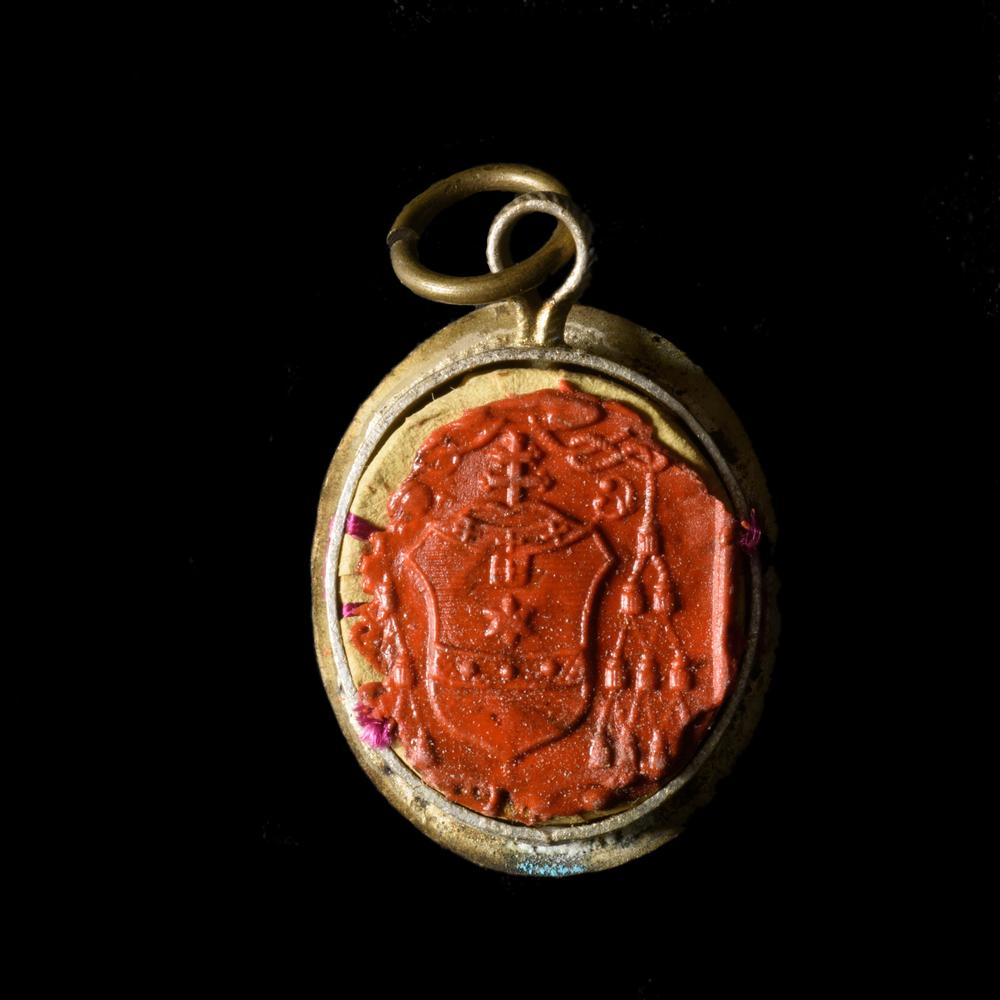
Ecclesiastical seal and silk threads present.
PERIOD : 18th century
DIMENSIONS : 2.3 cm × 2 cm
SIZE : 0.9" × 0.8"
Through this fragment of Saint Clare’s habit, the faithful are invited to draw closer to one of the most luminous figures of evangelical poverty. Spiritual companion of Saint Francis of Assisi, Clare embodies total abandonment to Christ, the cloistered life, silent prayer, and the radical expression of Franciscan poverty lived in its feminine dimension.
Beyond its spiritual significance, an 18th-century textile relic from a Poor Clare habit holds genuine historical interest. Textile relics originating from religious garments are always rarer than bone relics due to the fragility of the material and its natural wear. When preserved, they generally come from liturgically or symbolically important garments: profession habits, conventual mantles, or textiles associated with the saint’s monastic life.
The fragment presented here belongs to this category of direct contact relics, having touched the saint’s body during her earthly life. It is not a narrative relic (linked to a specific miracle or episode), but rather a relic of presence — a material witness to the daily, austere, and consecrated life led by Clare within the enclosure of Assisi.
The floral mounting surrounding it reinforces this symbolic reading: the mystical flower evokes the consecrated soul blossoming in poverty — a central theme of Poor Clare spirituality.