TREPANNED HUMAN SKULL – ANTIQUE ANATOMICAL SPECIMEN
TREPANNED HUMAN SKULL – ANTIQUE ANATOMICAL SPECIMEN
Our prices are in euros, the prices converted in dollars or other currencies can vary according to the rate.
Free shipping – fast and secure delivery.
ref: #RK00-976Couldn't load pickup availability
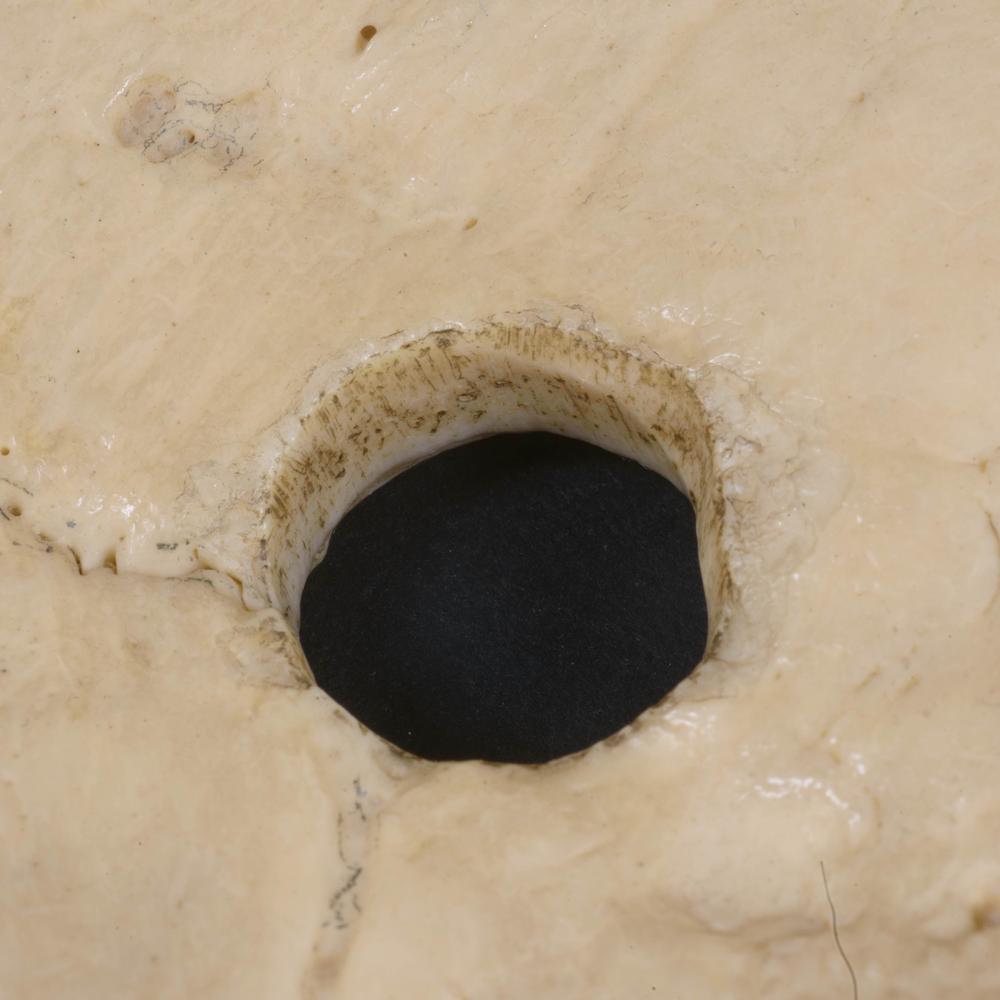
Human skull displaying a trepanation with signs of bone remodelling
Antique anatomical or teaching specimen
Probably late 19th – early 20th century
Human skull with mandible, formerly prepared and mounted, most likely for anatomical, medical or educational purposes.
The cranium was carefully sawn around its entire circumference to create a removable skullcap, allowing examination of the endocranial cavity. Several small artificial perforations and traces of former fastening devices are also visible. These indicate that the specimen was once anatomically mounted, particularly to secure and articulate the mandible, which is now detached.
Most notably, the upper part of the cranial vault displays a trepanation opening of approximately circular shape. Examination of its margins reveals a rounded and remodelled appearance consistent with a process of healing and bone remodelling. These characteristics suggest that the trepanation may have been performed during the individual's lifetime and that the individual survived long enough after the procedure for a bone reaction to develop around the opening.
This pathological or surgical feature may have been the reason for preserving the skull and subsequently preparing it as a medical or anatomical study specimen.
The skull also bears various old inscriptions and inventory or study markings, some of which remain partially visible. The dentition is incomplete and shows several old tooth losses. A few metal components and traces of fastening from the former mounting are still present.
Condition: good overall condition. Removable skullcap, formerly sawn. Mandible originally articulated. Dentition partially preserved with losses. Traces, perforations and remnants of a former anatomical mounting. Old markings and inscriptions. Wear and alterations consistent with the age and scientific use of the specimen.
Proposed date of preparation: late 19th – early 20th century.