THE GRAND ALBERT (1743 + 1769) – Book of secrets, medicine and occult knowledge
THE GRAND ALBERT (1743 + 1769) – Book of secrets, medicine and occult knowledge
Our prices are in euros, the prices converted in dollars or other currencies can vary according to the rate.
Free shipping – fast and secure delivery.
ref: #RK00-Couldn't load pickup availability
Secrets, remedies, recipes and practical medicine
A body of operative knowledge between natural magic, domestic medicine and popular tradition – 18th century
This ensemble brings together two works closely linked by their function, reception, and imaginative framework: The Admirable Secrets of Albert the Great, printed in Lyon in 1743, and The Modern Albert, or New Proven and Lawful Secrets, published in Paris in 1769. Together, they form a particularly telling testimony to the survival and adaptation, in the 18th century, of a practical body of knowledge situated at the crossroads of popular medicine, natural magic, domestic alchemy, and empirical secrecy.
These books were not intended solely for scholarly curiosity. They were designed to be consulted, used, and browsed in search of a recipe, a remedy, a method, or a concrete answer to an immediate need. They belong to a form of active transmission literature in which the book does not merely describe knowledge: it makes it available, renders it operational, and accompanies its use.
The Admirable Secrets of Albert the Great belongs to one of the most famous traditions of European occult and medical culture. Under the prestigious name of Albert the Great, a learned and legendary authority, the work gathers treatises devoted to conception, the virtues of herbs, precious stones and animals, along with considerations of physiognomy and recipes for protection against plague, malignant fevers, poisons, and infected air. The book thus constitutes a reservoir of mixed knowledge, where observation of the natural world, empirical medicine, and ancient beliefs coexist without contradiction.
This type of work belongs neither to pure superstition nor to academic science in the modern sense. It reflects a time when the hidden properties of things — plants, minerals, animal substances, human temperaments — were considered real, and when knowledge of them promised an effect upon the body, health, protection, and sometimes destiny. The authority of the text rests precisely on this promise: that of transmitted, tested, accumulated knowledge, made available to the reader as a set of usable powers.
Alongside it, The Modern Albert extends and updates this tradition. The title itself reveals its ambition: to take up the legacy of the old “secrets” and reorganize it in the light of more recent discoveries and within a framework presented as lawful and proven. Where The Admirable Secrets still belong strongly to the older medico-magical tradition, The Modern Albert shifts this material toward a more domestic, practical use, more directly oriented toward everyday needs. Remedies, useful recipes, preservation techniques, and concrete solutions compose here a body of knowledge for household, countryside, and ordinary survival.
The union of these two volumes produces a remarkably coherent ensemble. The first embodies the tradition of secrets attributed to an ancient authority, wrapped in the prestige of obscure transmission; the second shows how this tradition was continued, adapted, and reformulated within a culture of useful recipes and applied knowledge. Together, they offer access to a world in which the book functioned at once as manual, arsenal, aide-mémoire, and repertoire of possible actions.
The interest of this ensemble also lies in its materiality. These volumes have passed through time as objects of real consultation. They bear visible traces of their circulation, their use, and their presence in private libraries or domestic settings where one sought not theory, but solutions. This lived dimension is essential: it connects these books to practices, gestures, beliefs, and concrete habits. They are not abstract survivals of an old imaginary, but material witnesses to a daily relationship with secrecy, remedy, and the invisible.
Through their content, aura, and coherence, The Admirable Secrets of Albert the Great and The Modern Albert today constitute a particularly evocative ensemble of the culture of books of secrets in the 18th century. They are books of passage between several worlds: between natural magic and medicine, between inherited learning and popular use, between ancient authority and modern adaptation. They preserve the trace of a time when knowledge was not yet clearly divided between science, recipe, belief, and experience, but circulated in the dense, compelling, and operative form of the secret.
Condition and bibliophilic description
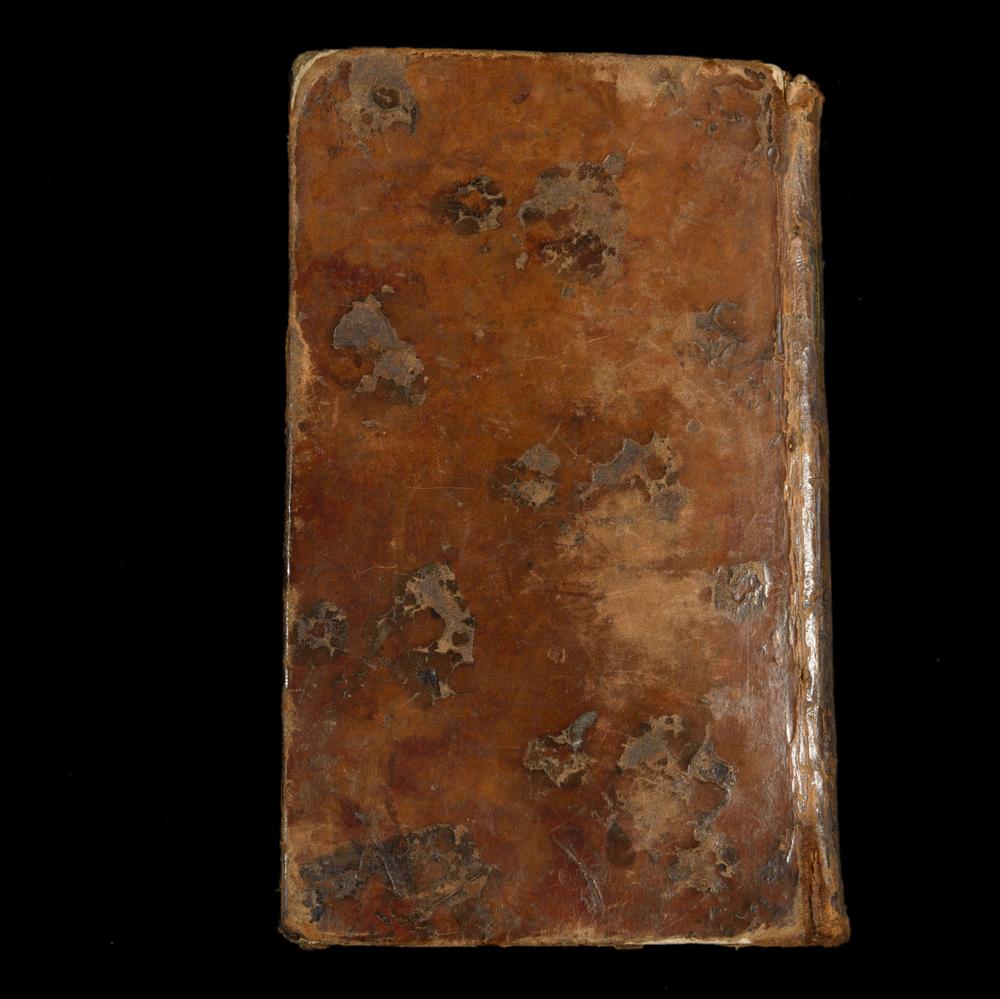
Set of two in-12 volumes. The Admirable Secrets of Albert the Great: Lyon edition of 1743, 4 books in one volume, illustrated with 4 plates outside the text. Binding in brown calf, probably 19th century, spine with raised bands and gilt decoration, Duseuil-style frame on the covers, double gilt fillet on the edges, inner gilt dentelle and gilt edges. Decorative binding with strong visual presence, showing signs of use and patina consistent with the age of the work. Interior well preserved, clear printing, solid overall condition.
The Modern Albert: Paris edition of 1769, in contemporary speckled brown calf, smooth gilt-decorated spine, black title label. Binding shows rubbing, wear to the head and tail, losses and impact marks from use. Interior sound, with even old patina and normal signs of handling. A coherent ensemble, well preserved in its condition, highly evocative of the prolonged use of this type of practical and secret literature.
Format : 2 volumes in-12
Dimensions : approx. 16 × 9 cm
Size : approx. 6.3" × 3.5"
Language : French
Dating : 1743 and 1769
Binding : brown calf; later decorative binding for The Admirable Secrets of Albert the Great, contemporary speckled brown calf for The Modern Albert
The Grand Albert designates one of the most famous books of secrets in the European popular tradition. Attributed to Albert the Great, a major learned figure of the Middle Ages, it is not a scientific treatise in the modern sense, but a composite collection combining domestic medicine, occult properties of plants, stones and animals, protective recipes, physiognomy, and empirical knowledge transmitted as “secrets.” Its authority rests precisely on this prestigious attribution: the name of Albert the Great guarantees the value of an ancient body of knowledge, reputed to be powerful, useful, and tested. For centuries, the Grand Albert was read, preserved, copied, and consulted as a book of remedies, procedures, and hidden knowledge, at the crossroads of natural magic, popular medicine, and esoteric curiosity. It belongs to that widely disseminated literature in which the book is not merely an object of reading, but a reservoir of uses, recipes, and powers believed to act upon the body, health, and the everyday world.