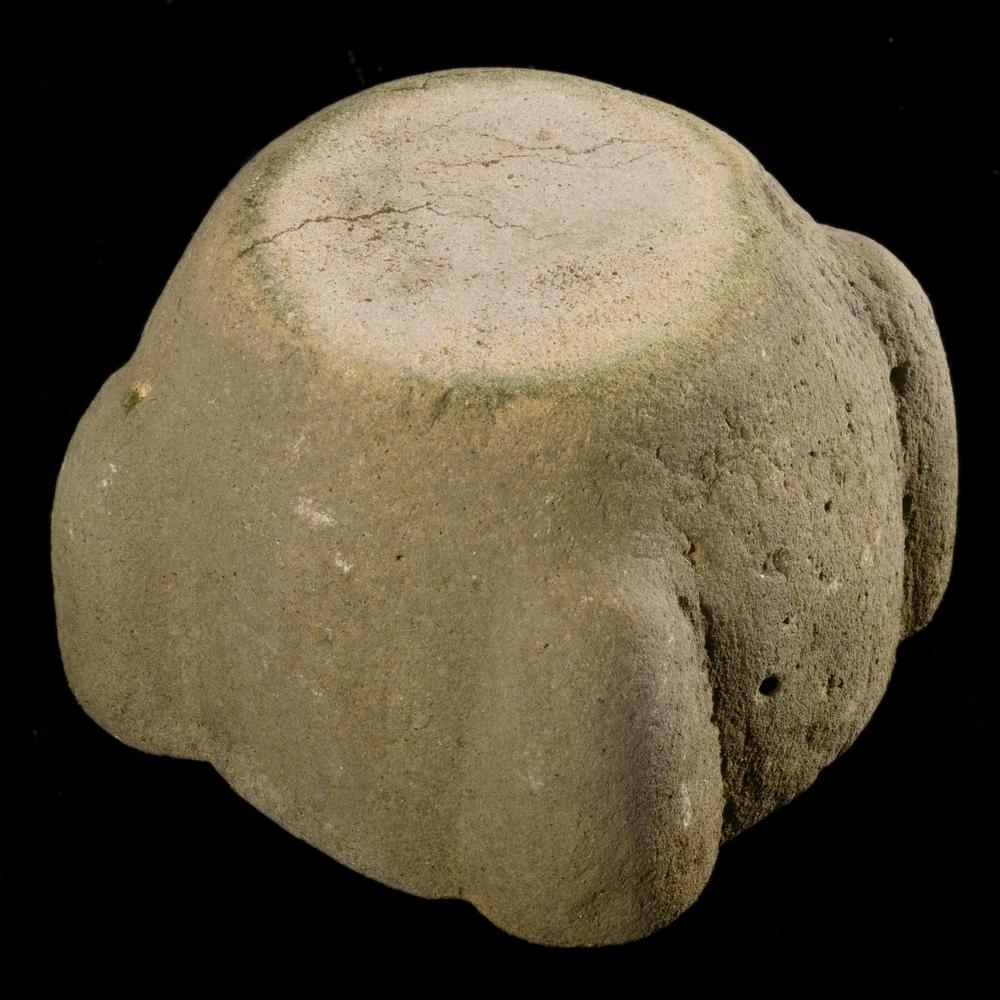
STONE MORTAR — 16th–17th CENTURY
STONE MORTAR — 16th–17th CENTURY
Our prices are in euros, the prices converted in dollars or other currencies can vary according to the rate.
Free shipping – fast and secure delivery.
ref: #RK00-899Couldn't load pickup availability
This antique stone mortar, which can be dated between the late 16th and the 17th century, constitutes a particularly authentic witness to the scholarly and medicinal practices of its time. Its massive and slightly irregular silhouette, together with the marked thickness of its walls, reflects entirely manual workmanship, revealing an object conceived to withstand repeated and demanding use. Four peripheral swellings ensure a stable and functional grip, while a pouring spout directly carved from the material allowed for the precise transfer of liquid or semi-liquid preparations such as decoctions, macerations or therapeutic compounds.
The deeply hollowed bowl displays an old patina of great density, almost satin-like, resulting from prolonged use. The interior of the stone, gradually polished by the grinding of substances, shows regular and homogeneous wear, a tangible sign of constant use over time. This surface, softened by repeated gestures, gives the object a strong material presence that is difficult to reproduce and immediately perceptible.
During the 16th and 17th centuries, the mortar occupied an essential place in apothecaries’ shops, learned circles and certain religious communities. It was used to reduce plants, resins, minerals and other materials employed in the preparation of remedies to powder. In an intellectual context where the heritage of ancient traditions mingled with the earliest forms of experimentation, this instrument fully participated in the medical practices and empirical research of the period.
Having come down to us in a remarkable state of preservation, without notable modern alteration, this mortar retains the integrity of its original reliefs as well as the silent memory of its past use. Today it stands as a piece of strong character, ideal for enriching a specialised collection or a cabinet of curiosities, intended for a collector sensitive to the tangible authenticity of antique objects.
PERIOD : 16th – 17th century
DIMENSIONS : 17 cm × 12 cm
SIZE : 16.7" × 4.7"