RELIQUARY OF SAINT ANDREW THE APOSTLE
RELIQUARY OF SAINT ANDREW THE APOSTLE
Our prices are in euros, the prices converted in dollars or other currencies can vary according to the rate.
Free shipping – fast and secure delivery.
ref: #RK00-960Couldn't load pickup availability
Rare 18th-century silver reliquary with a glass front containing a relic of Saint Andrew the Apostle.
This precious oval reliquary features an antique silver mount characteristic of devotional works produced during the second half of the 18th century. Its particularly refined interior decoration reflects the great care devoted to the presentation of relics during this period.
The original glass front protects a composition set against a light silk background, adorned with a finely crafted silver wire border. At the center is the sacred relic, mounted on a small diamond-shaped support according to the traditional practices of ecclesiastical workshops.
The original handwritten inscription allows the relic to be identified:
“Andr. Ap.”
→ Sancti Andreae Apostoli
Translation: Saint Andrew the Apostle
This is therefore a relic attributed to Saint Andrew, one of the Twelve Apostles of Christ and the brother of Saint Peter.
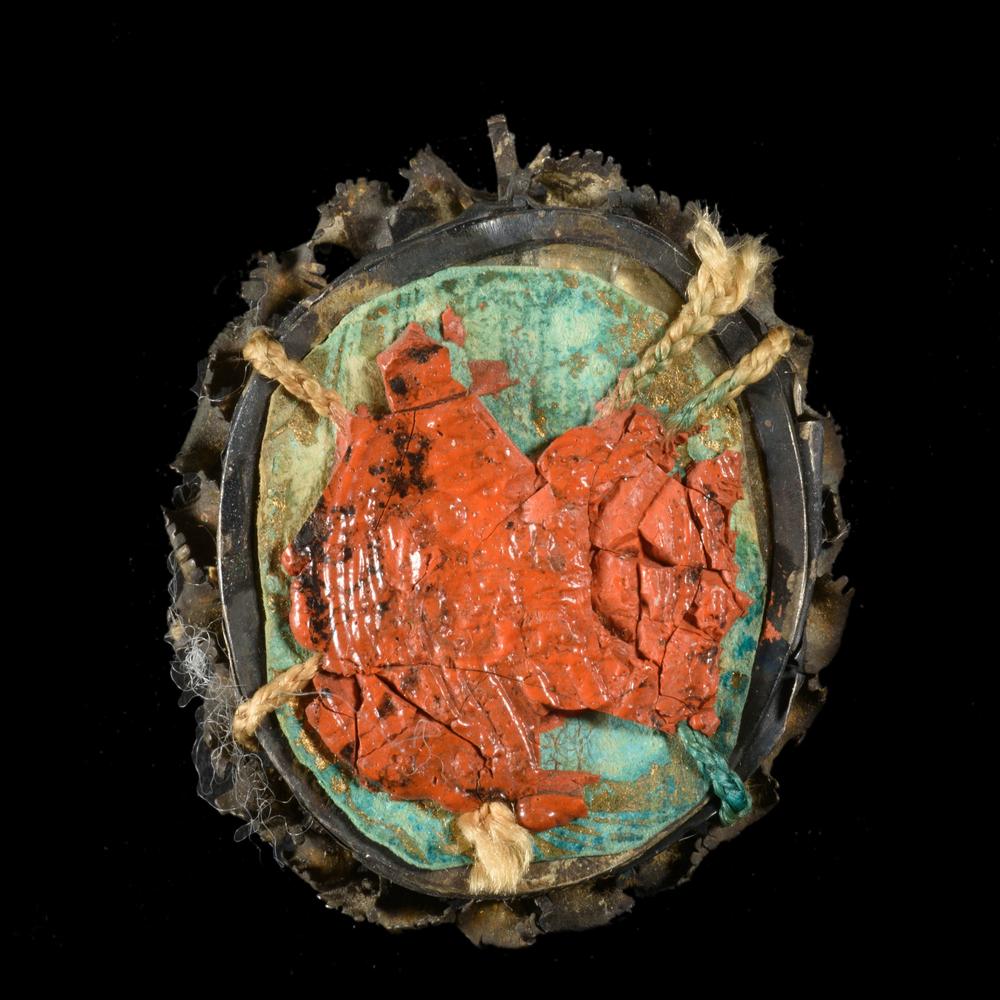
The reverse retains its important red wax ecclesiastical seal together with its original silk threads. Despite age-related cracking and minor losses, the seal remains intact and guarantees the integrity of the reliquary, which has never been opened.
Original antique glass.
Original interior assembly.
Original ecclesiastical seal preserved.
Unopened.
PERIOD: 18th century
SIZE: 3 × 2.5 cm
SIZE: 1.2" × 1"
Saint Andrew the Apostle
Saint Andrew was one of the first disciples called by Christ. Born in Bethsaida in Galilee, he worked as a fisherman alongside his brother Simon Peter before leaving everything behind to follow Jesus. The Gospels present him as one of the earliest witnesses to Christ’s public ministry and as a privileged intermediary among the disciples. After Pentecost, tradition holds that he evangelized several regions of the Greek world before suffering martyrdom at Patras in Achaea. Refusing to be crucified on a cross identical to that of Christ, he is said to have requested a cross in the shape of an X, which later became known as the famous “Saint Andrew’s Cross.” Venerated throughout Christendom since antiquity, he is the patron saint of many countries, notably Scotland, Greece, and Russia. His relics were among the most sought-after in the Christian world and were the object of profound devotion throughout the Middle Ages and the early modern period.