RELIC OF SAINT CATHERINE OF RICCI
RELIC OF SAINT CATHERINE OF RICCI
Our prices are in euros, the prices converted in dollars or other currencies can vary according to the rate.
Free shipping – fast and secure delivery.
ref: #RK00-835Couldn't load pickup availability
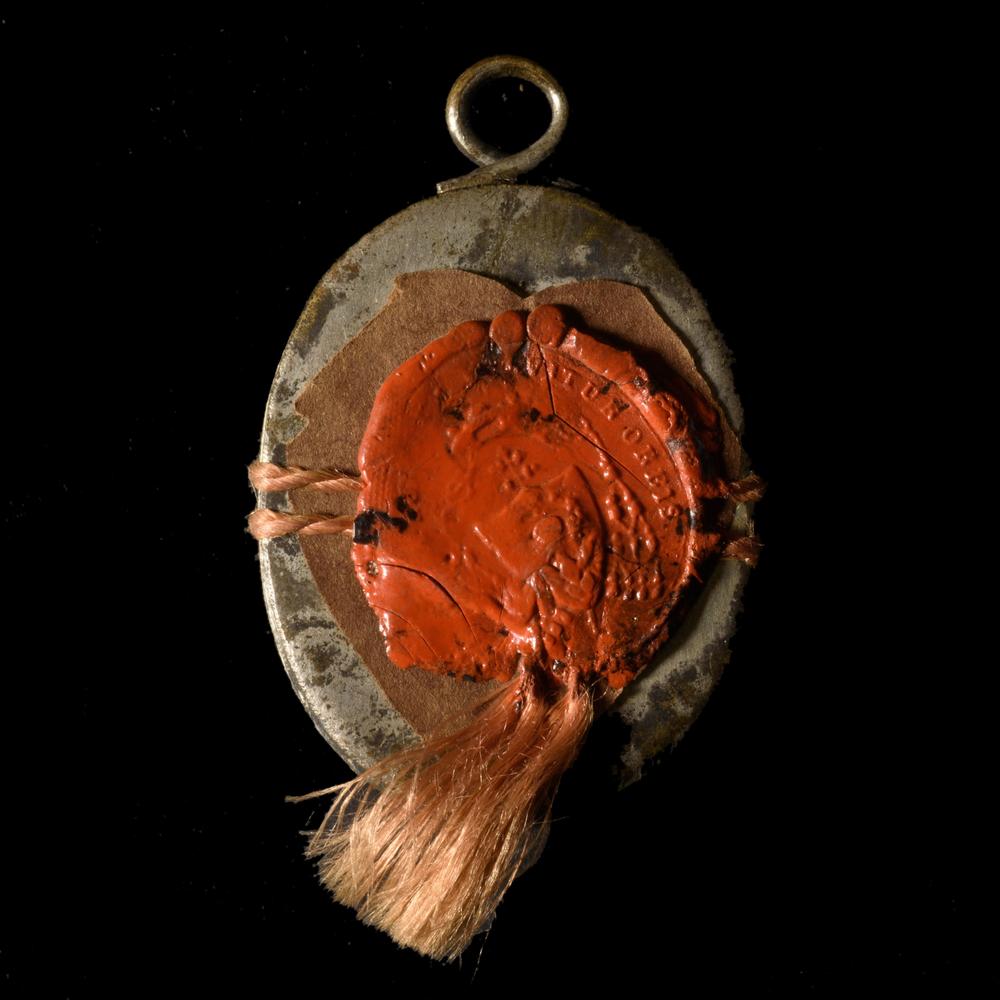
Rare oval reliquary in silvered metal mount with its original glass front, containing a first-class relic of Saint Catherine of Ricci, a great Dominican mystic of the 16th century. The relic is carefully presented on a background of antique red fabric enhanced with golden flakes, and adorned with a delicate flower-shaped gilt ornament, highlighting its sacred character and the refinement of its display.
The relic is identified by a perfectly legible handwritten Latin label: “Ex carne S. Cath. de Ricc.”, indicating that it is a fragment of the flesh of the saint — a particularly sought-after type of relic.
The ensemble is complete, with its original ecclesiastical wax seal and its silk sealing threads still in place, attesting that the reliquary has never been opened since its creation. Its state of preservation is remarkable, both for the glass and for the metal mounting and interior presentation.
Authenticated relics of Saint Catherine of Ricci are considered rare, due to the great veneration she has enjoyed since her canonization and the very strict preservation of her relics within Dominican communities. Most known fragments remain in convents in Italy or in a few historic reliquaries scattered across Europe.
Please note: some elements of the decoration are detached inside the reliquary.
PERIOD : 18th century
DIMENSIONS : 4 cm × 3.5 cm
SIZE : 1.6" × 1.4"
Saint Catherine of Ricci (1522–1590), a Dominican religious from Prato, is one of the great mystics of the Christian Renaissance. Entering the convent at a very young age, she led a life of intense prayer marked by repeated ecstasies, visions of Christ, and the famous experience of the Friday Passion, which she spiritually relived each week.
A woman of ardent charity and spiritual advisor to many prominent figures — including cardinals and political leaders — she was also recognized for her profound sense of monastic governance and her human wisdom, which made her a highly respected prioress.
Her body, said by tradition to have remained incorrupt for a long time, attracted numerous pilgrims to her tomb. Canonized in 1746, she is celebrated on February 2 as a model of humility, contemplation, and mystical union with Christ.