RELIC OF SAINT APOLLONIA
RELIC OF SAINT APOLLONIA
Our prices are in euros, the prices converted in dollars or other currencies can vary according to the rate.
Free shipping – fast and secure delivery.
ref: #RK00-955Couldn't load pickup availability
Rare oval reliquary in silvered bronze with a glass front containing a relic of Saint Apollonia. The relic is placed at the center of a particularly refined composition set against a sumptuous moiré green silk background whose deep reflections enhance the entire interior arrangement.
Surrounding the relic is a spectacular radiant glory composed of fine gilded rays, carefully cut and arranged in a fan-like pattern, creating a powerful luminous effect. Delicate ornaments in cut gilt paper frame the relic with an elegant symmetrical Baroque-inspired decoration, while the inner metallic border forms a shimmering crown that further enhances the precious character of the ensemble.
The old handwritten label clearly identifies the relic:
“S. Appolloniae V. M.”
→ Sanctae Apolloniae Virginis et Martyris
Translation: Saint Apollonia, Virgin and Martyr
The delicacy of the decoration, the harmony of the colors, and the quality of the convent craftsmanship give this reliquary a remarkable visual presence, typical of precious 18th-century religious works.
Good condition with original glass.
Unopened.
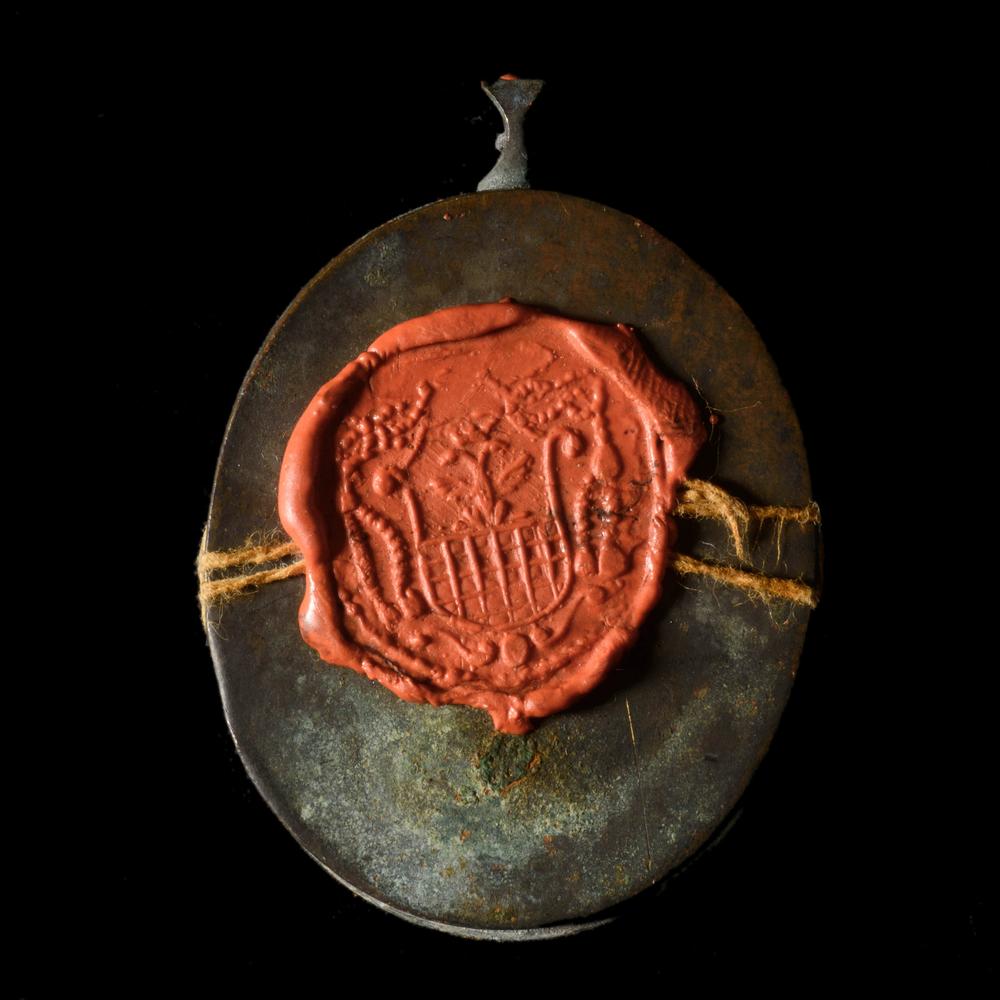
Ecclesiastical seal and silk threads present.
PERIOD: 18th century
DIMENSIONS: 5 cm × 4 cm
SIZE: 2" × 1.6"
Saint Apollonia was a Christian martyr from Alexandria in the 3rd century. According to tradition, she endured terrible tortures during the persecutions against Christians before being condemned to the stake. Refusing to renounce her faith, she threw herself into the flames.
Because of the tortures inflicted upon her teeth, she became the patron saint against toothaches and the patroness of dentists. Her cult was extremely popular throughout Christian Europe, particularly from the Middle Ages to the 18th century, during which her relics were widely venerated in convents, chapels, and religious collections.