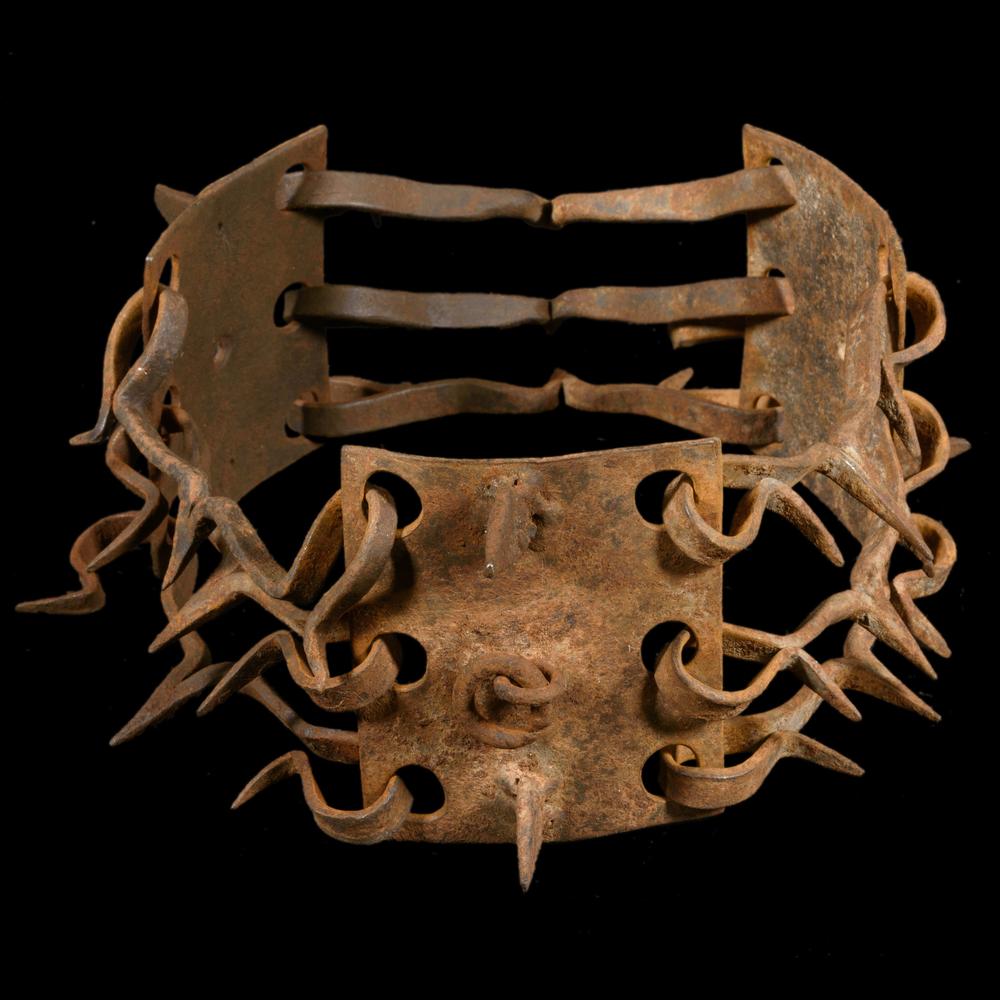
RARE SPIKED ANTI-BITE COLLAR, 18TH CENTURY
RARE SPIKED ANTI-BITE COLLAR, 18TH CENTURY
Our prices are in euros, the prices converted in dollars or other currencies can vary according to the rate.
Free shipping – fast and secure delivery.
ref: #RK00-966Couldn't load pickup availability
Impressive forged iron protective collar dating from the 18th century. Designed to prevent any grip or attack at the neck, it is entirely fitted with long forged spikes that transform the object into a true deterrent device. Its structure is composed of several curved metal elements joined by rivets, forming a particularly robust articulated assembly.
The piece features a succession of plates and movable sections that provide both strength and adaptability to the animal that once wore it. The spikes, individually forged by hand, testify to considerable craftsmanship and give the object a striking silhouette characteristic of this type of historic equipment.
The surface retains a fine period patina, marked by a stable and even oxidation of the metal. Traces of use, manufacturing irregularities, and the dark tones of the iron all contribute to the object's authentic character. Its overall condition remains remarkable considering its age.
PERIOD : 18th century
Archaeological discoveries reveal the use of anti-bite collars as early as the Middle Ages. Metal collars fitted with outward-facing spikes or thorns have been unearthed at medieval sites. These collars were primarily intended for domestic animals, especially dogs, to protect them from wolf attacks. However, some evidence suggests that humans may also have worn such collars, not only for protection against wolves but also, when deemed necessary, to guard themselves against possible encounters with supernatural creatures.
Although historical and archaeological evidence remains scarce, it is sufficient to indicate that this practice existed, at least on a marginal scale. The need to protect oneself from predators, combined with cultural beliefs and superstitions, may have led certain individuals to wear such collars.