Our prices are in euros, the prices converted in dollars or other currencies can vary according to the rate.
Free shipping – fast and secure delivery.
ref: #RK00-964Couldn't load pickup availability
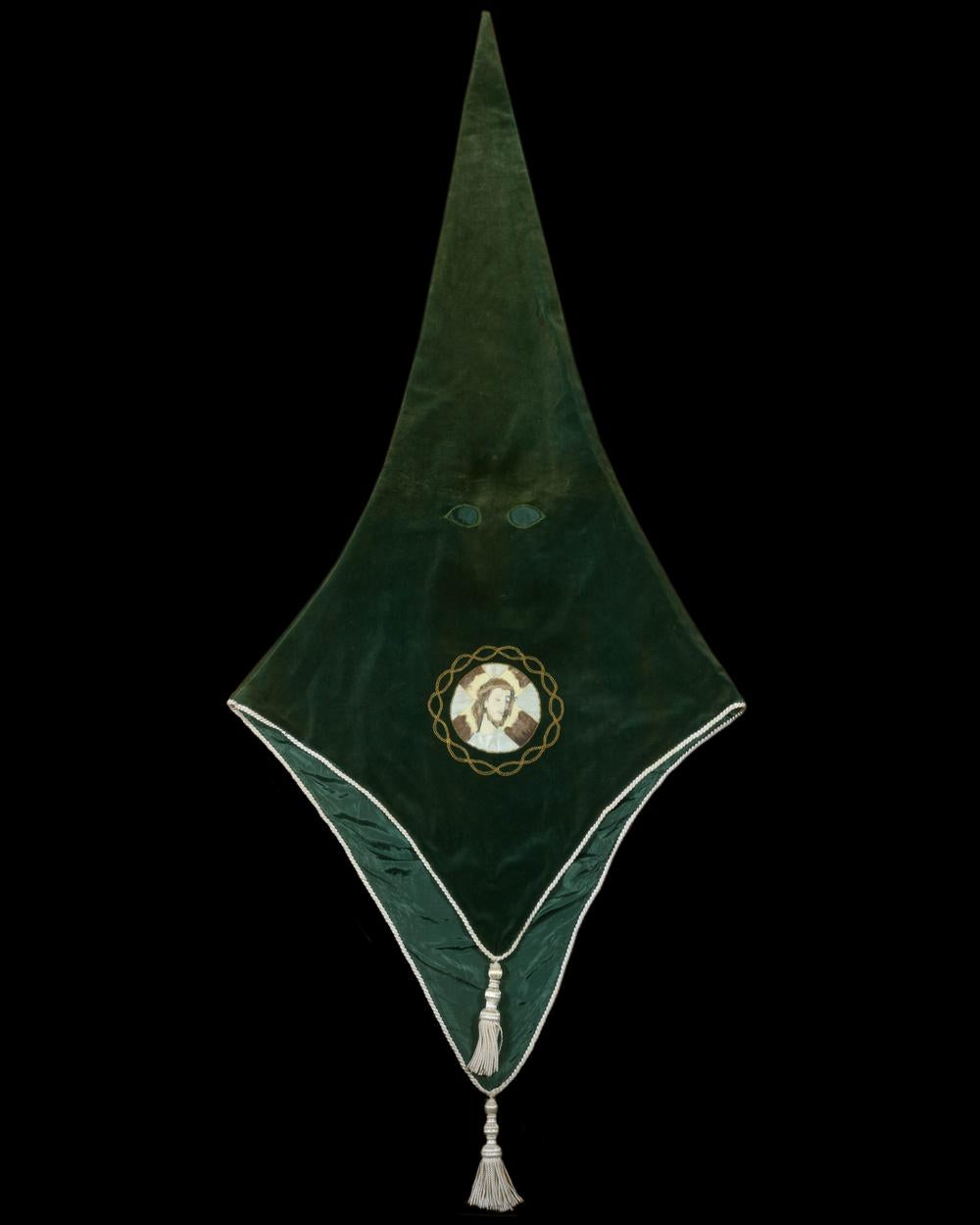
Impressive Spanish penitential capirote, also known as a Nazarene hood. This tall conical headdress is covered in deep green velvet and fitted with a face veil pierced with two eye openings. The piece was made according to the traditions of Spanish penitential brotherhoods, known as cofradías.
The front is adorned with an embroidered medallion depicting Christ crowned with thorns. The textile appliqué is framed by a circular gold-tone passementerie decoration. The lower edge is finished with a light twisted braid and ends with two elegant decorative tassels.
The green color is traditionally associated with Christian hope and is found among several Spanish penitential brotherhoods, particularly in Andalusia and Castile. This type of capirote formed an essential part of the ceremonial attire worn by penitents during Holy Week processions.
The reverse is simply executed and retains its original conical shape. The piece remains in very good overall condition, showing only light signs of use consistent with its ceremonial function.
A particularly evocative object reflecting Spanish religious traditions and the world of penitential brotherhoods.
White fabric lining inside, showing signs of use.
PERIOD: First half of the 20th century
DIMENSIONS: 150 cm
SIZE: 59"
Historically, the capirote was used by flagellants from the Middle Ages onward. It was also associated with sentences handed down by the Inquisition, during which condemned individuals were required to wear this headdress as a form of public humiliation. This humiliation echoed that of Jesus Christ during His ascent to Golgotha.
The hood was likewise worn by flagellants who, as their name suggests, inflicted penances upon themselves in atonement for their sins. Self-flagellation was among the most common of these practices. The concealed face allowed the wearer to remain anonymous.
From the 17th century onward, the brotherhoods of Seville began using the capirote during Holy Week processions in commemoration of the Passion of Christ, the remission of mankind’s sins, and His subsequent Resurrection.