OCCULT “MEMENTO MORI” DAGGER WITH DEATH AND SERPENT
OCCULT “MEMENTO MORI” DAGGER WITH DEATH AND SERPENT
Our prices are in euros, the prices converted in dollars or other currencies can vary according to the rate.
Free shipping – fast and secure delivery.
ref: #RK00-967Couldn't load pickup availability
Exceptional ceremonial dagger of powerful symbolic character, crafted in patinated bronze and finely engraved steel, surmounted by a striking representation of Death in the form of a hooded skeleton standing upon the guard, accompanied by an entwined serpent symbolizing temptation, forbidden knowledge, transformation, and eternity.
The sculptural pommel, entirely executed in bronze, depicts a draped skeleton in the great tradition of the memento mori. The figure, wrapped in a large monastic cloak, holds a dagger in its right hand, while the rib cage and skull are rendered with remarkable attention to detail and relief. The quality of the casting and the expressiveness of the sculpture give the ensemble a particularly powerful macabre presence.
A finely modeled serpent coils around the guard, its body winding around the crosspiece before ending in a naturalistic head beneath the hilt. The association of Death and the serpent creates an iconography deeply connected to European Symbolist, Hermetic, and esoteric traditions.
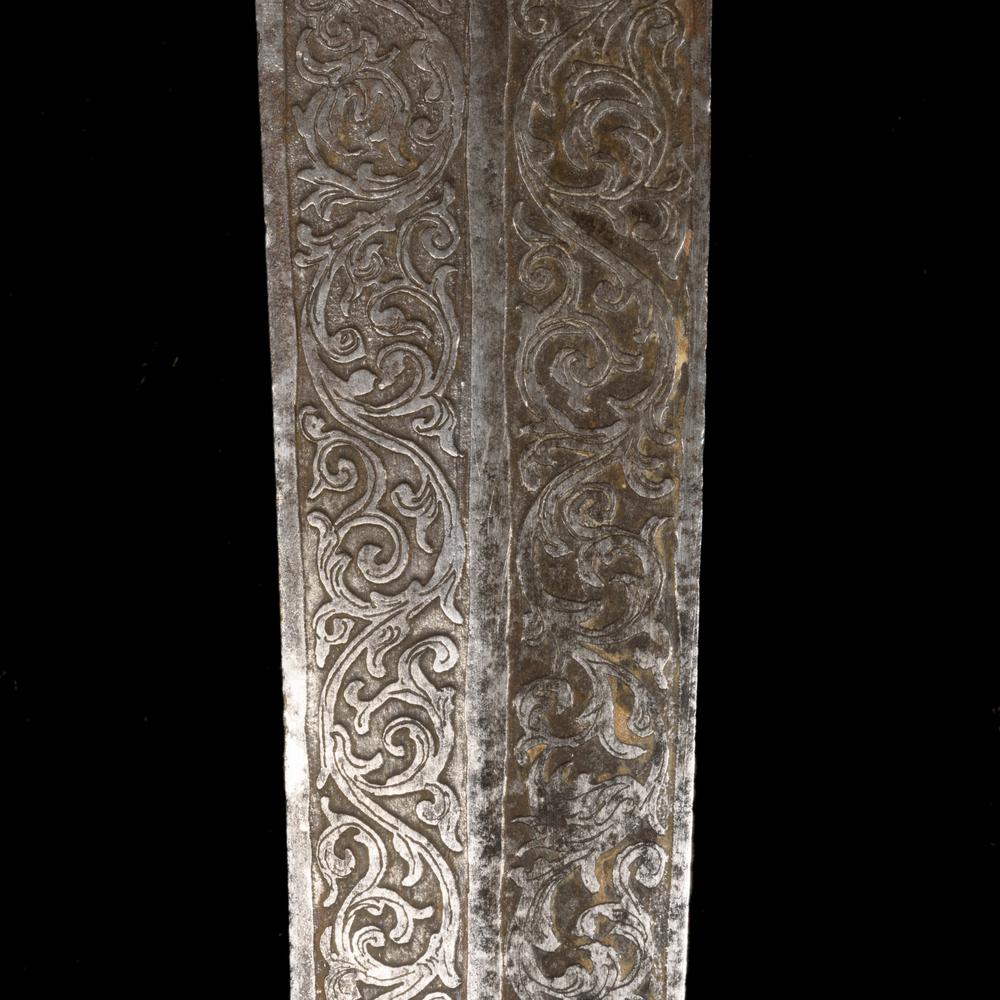
The curved steel blade is entirely engraved with rich foliate arabesques executed with great refinement. The matching metal scabbard repeats this elegant decoration of scrolling foliage and engraved vegetal motifs. The locket is adorned with stylized floral motifs, while the chape ends in an elegant spherical finial.
Through its complex iconography and particularly meticulous execution, this piece evokes prestigious productions associated with esoteric circles and European initiatory societies of the late 19th century, a period marked by a profound revival of Hermeticism, occult sciences, and the symbolism of Death.
The figure of the armed skeleton associated with the initiatory serpent forms a powerful symbolic language borrowed from Western Hermetic traditions, in which Death appears not merely as an end, but as a passage, a transformation, and a form of higher knowledge.
Representations of Death in the form of a skeleton draped in a hooded cloak occupy a central place in Western macabre imagery. Inherited from the medieval traditions of the memento mori and the dances of death, this figure embodies the inescapable power of human destiny and the fragility of existence. Stripped of all flesh, the skeleton becomes the universal symbol of mortality, while the hood reinforces the mysterious, almost initiatory dimension of this funerary presence. Both fascinating and unsettling, this iconography has endured through the centuries as a meditation on time, human vanity, and the inevitable passage into the unknown.
Ritual and ceremonial weapons linked to occult traditions possess an ancient history deeply rooted in the spiritual and initiatory beliefs of past civilizations. From Antiquity onward, many cultures used sacred blades during religious, sacrificial, or magical rites. Pre-Columbian civilizations, as well as certain ancient Chinese dynasties, produced ceremonial knives in flint, jade, or precious metals intended for symbolic and spiritual purposes.
Within European traditions, the blade gradually acquired an esoteric and initiatory dimension. Certain warrior beliefs attributed to weapons the ability to retain the vital force or spiritual energy of those who had fallen beneath their edge. During the Middle Ages and the Renaissance, grimoires and Hermetic practices frequently mention ritual knives used in magical operations, invocations, and secret ceremonies.
In the 19th century, with the revival of occultism, Symbolism, and European initiatory societies, ceremonial daggers experienced renewed interest. Inspired both by ancient Hermetic traditions and the aesthetics of dark Romanticism, they became objects charged with powerful symbolism, associated with initiation rites, esoteric circles, and cabinets of curiosities devoted to occult sciences and macabre arts.