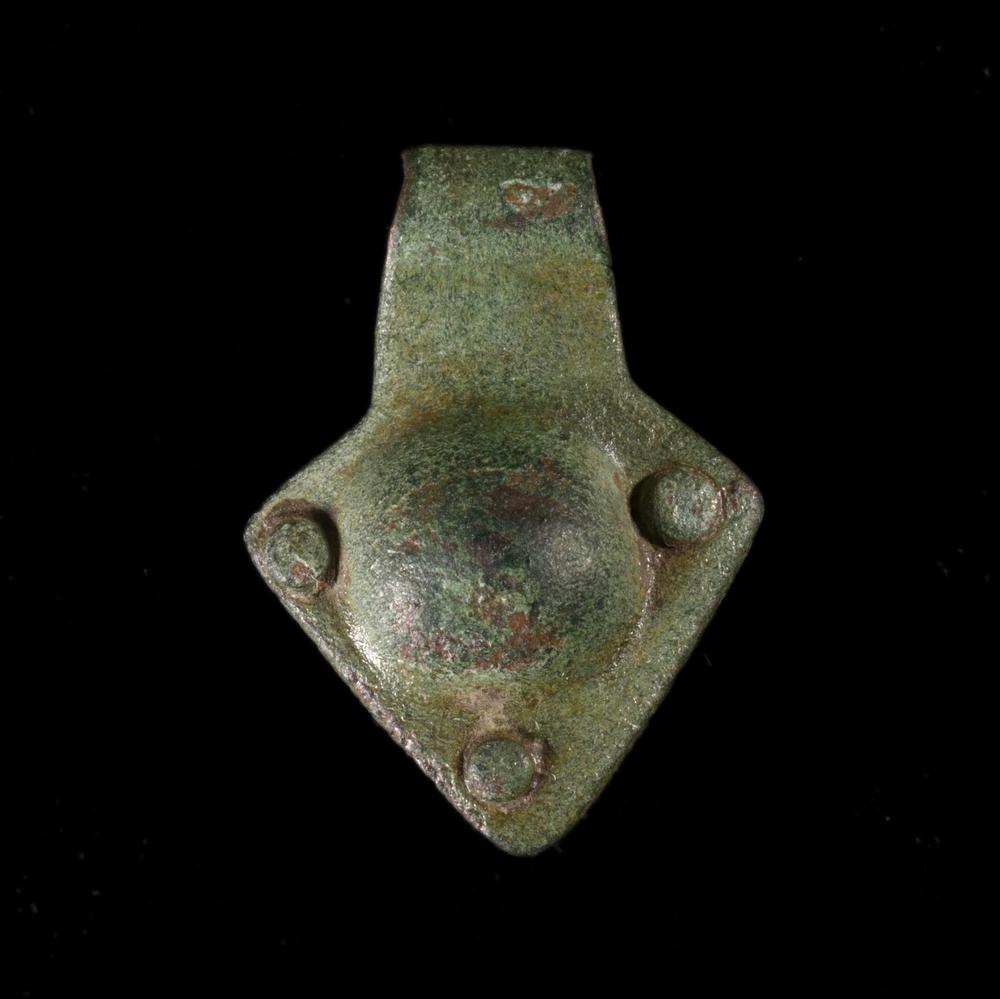
MEDIEVAL PROTECTIVE AMULET – 12TH–13TH CENTURY
SOLD — This object is now part of a private collection
MEDIEVAL PROTECTIVE AMULET – 12TH–13TH CENTURY
Our prices are in euros, the prices converted in dollars or other currencies can vary according to the rate.
Free shipping – fast and secure delivery.
ref: #RK00-888Couldn't load pickup availability
Rare medieval hollow amulet in bronze, made from a single hammered sheet, shaped, folded back onto itself and closed by riveting. Dated to the 12th–13th centuries, this amulet has passed through nearly nine centuries of history, making it an ancient protective object approaching a millennium in age.
The suspension is ensured by the deliberately open fold of the bronze sheet, allowing the passage of a leather thong or cord. This archaic and functional wearing device is characteristic of medieval protective objects, intended to be worn discreetly on the body, often beneath clothing.
The hollow and domed structure of the object unequivocally attests to its containing function. This type of amulet, generally referred to as a phylactery, originally enclosed a protective content: relics, symbolic fragments, or protective substances. Such objects belonged to a spirituality of protection deeply rooted in medieval daily life.
Within a context marked by epidemics, plagues, wars, famines, and constant insecurity, this type of phylactery was worn as a spiritual safeguard against illness and death, epidemics (notably the great medieval plagues), the dangers of travel, as well as malevolent influences and forces perceived as hostile.
These protective amulets were used by both adults and children, by travelers, the sick, or within a broader concern for the preservation of body and soul. They could also accompany their wearer in a funerary context, extending their protective function beyond life.
The manufacturing technique — thin hammered sheet, folded and riveted, with integrated suspension loop — is typical of medieval productions of the 12th and 13th centuries, prior to the widespread appearance of cast figurative devotional medals. The stable ancient patina, with green and brown nuances, is entirely consistent with the long-term evolution of bronze in an early historical context.
Hollow medieval phylacteries of this type, intact in their structure, with preserved suspension system and without modern alteration, are today rare. Their discreet nature and everyday use explain their low survival rate, which confers upon this example a particular historical and spiritual interest.
Important note
The object is presented in its ancient condition, without opening or modern intervention. The original content, if still present, has not been investigated, in accordance with good conservation practices and the respect due to this type of ancient object of spiritual and protective purpose.
This object fully belongs within the tradition of cabinets of curiosities , where spiritual protection, esotericism, and rare objects of the medieval world converge.
PERIOD : 12th–13th centuries
DIMENSION : 3 cm
SIZE : 1.2"