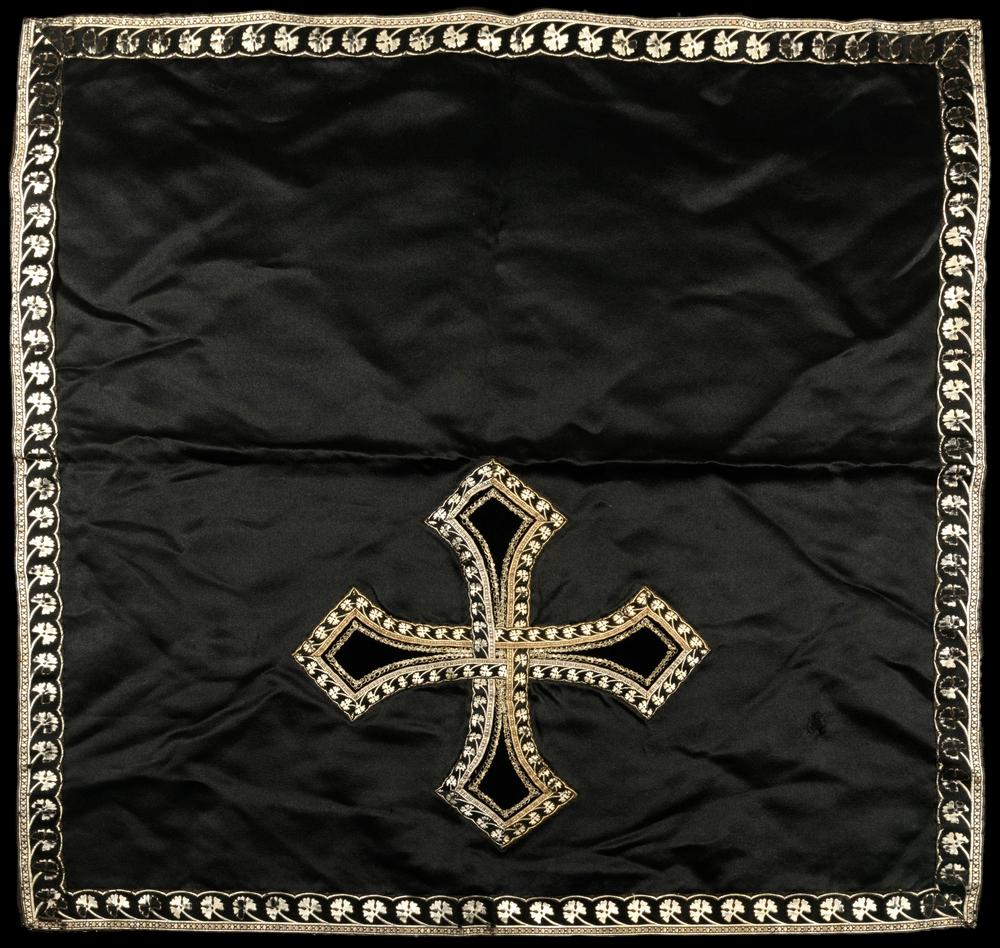
LITURGICAL TEXTILE FOR THE OFFICE OF THE DEAD – 19TH CENTURY
SOLD — This object is now part of a private collection
LITURGICAL TEXTILE FOR THE OFFICE OF THE DEAD – 19TH CENTURY
Our prices are in euros, the prices converted in dollars or other currencies can vary according to the rate.
Free shipping – fast and secure delivery.
ref: #RK00-863Couldn't load pickup availability
Rare and impressive funerary altar linen in black satin, richly adorned with a large central cross embroidered in golden metallic thread, surrounded by a continuous embroidered frame with stylized vegetal motifs. This type of textile was intended for Offices of the Dead and Requiem Masses, when black was the liturgical color of Christian mourning.
The black satin, with its subtly luminous surface, lends the ensemble a deep solemnity and a particularly strong visual presence. The central cross, of imposing size and finely executed, stands out with authority against the dark background, symbolizing at once death, prayer for the departed, and the hope of resurrection.
The entire perimeter is emphasized by a wide border embroidered in gold thread, carefully executed and typical of 19th-century ecclesiastical funerary ornaments. The textile displays old folds and undulations—natural marks of genuine liturgical use on the altar—reinforcing its authenticity and historical character.
This type of black altar linen, now completely absent from modern liturgy, was once indispensable during funerary ceremonies. Surviving examples have become rare, particularly in a format of such imposing size, with metallic embroidery that remains so legible and decorative.
A choice piece for collectors of liturgical textiles, enthusiasts of religious funerary art, or devotees of objects associated with ancient Christian rites of mourning.
PERIOD : 19th century
DIMENSIONS : 56 cm × 56 cm
SIZE : 22" × 22"
Placed directly on the altar, this square linen held the paten and the chalice during the consecration. Its symbolic role was profound: it recalled the shroud of Christ and was handled with deep reverence. During the Offices of the Dead and Requiem Masses, the Church employed a specific range of ornaments, almost always made of black silk or dark velvet, enhanced with silver embroidery.
This black color, abandoned in the 20th century, expressed both the gravity of death and the Christian hope of resurrection. Black corporals, used exclusively for prayers for the departed, are among the rarest liturgical textiles, as they were produced in limited quantities and often set aside after modern reforms.
Funerary ornaments included black chasubles, maniples, stoles, altar frontals, and funeral veils. Together, they conferred upon mortuary ceremonies a solemn and deeply symbolic aesthetic. Today, these antique pieces are highly sought after for their dark beauty, spiritual weight, and direct connection to Christian rites of mourning.