LARGE GRIFFIN WITH FANTASTIC BASIN
LARGE GRIFFIN WITH FANTASTIC BASIN
Our prices are in euros, the prices converted in dollars or other currencies can vary according to the rate.
Free shipping – fast and secure delivery.
ref: #RK00-859Couldn't load pickup availability
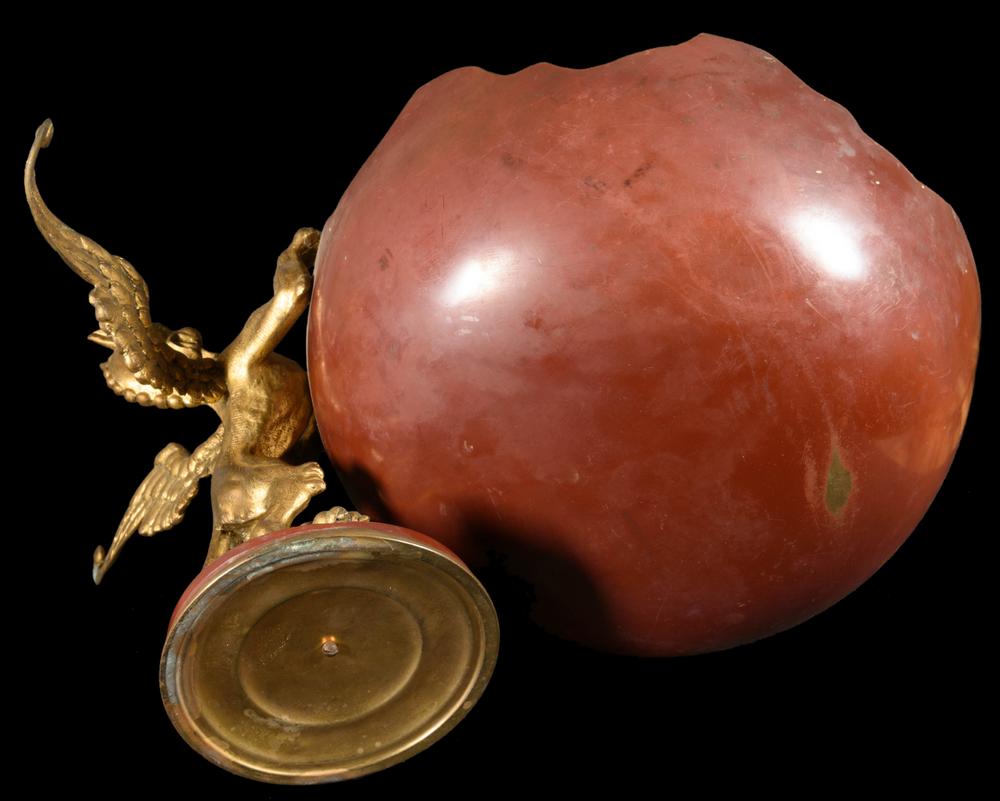
Exceptional decorative piece from the late 19th century, depicting a winged griffin in gilded bronze supporting a large basin in red-patinated metal, worked in the form of an opened giant shell.
The griffin, modeled with a taut naturalism and a finesse typical of Art Nouveau sculpture, rises on its hind legs, wings spread, jaws open in a dynamic, almost theatrical expression. The basin, with deliberately irregular edges, imitates a broken shell, as if emerging from a mythological egg, lending the ensemble a strong Symbolist charge.
The ensemble is in fine condition for use, displaying a perfectly homogeneous old patina on both the griffin and the basin. The original fixings, visible on the reverse, attest to an authentic, unaltered workshop assembly. The piece bears witness to the craftsmanship of the great European artistic foundries of the period 1880–1910, when fantasy, mythology, and organic forms combined to create conversation pieces intended for bourgeois interiors and artists’ studios.
Fantastic sculptures of this quality are particularly rare: representations of griffins, dragons, and hybrid creatures were produced in limited numbers and are often widely dispersed. The combination of such expressive gilded bronze with a fully hand-worked basin in a deep red evocative of Orientalist patinas gives this piece a unique character. These objects, often executed in very small editions, were conceived as spectacular centerpieces or as prestigious decorative elements in Symbolist interiors.
By virtue of its singular character and symbolic resonance, this object belongs to the tradition of the cabinet of curiosities.
PERIOD : late 19th century
DIMENSIONS : 27 cm × 22 cm
SIZE : 10.6" × 8.7"
The griffin, a mythological creature with the head of an eagle and the body of a lion, was throughout medieval and later Romantic Europe an emblem of strength, vigilance, and sovereignty. A guardian of treasures, positioned between heaven and earth by its wings and posture, it embodies the tension between powerful animality and spiritual intelligence. Art Nouveau reinterpreted this ancient figure, turning it into a dreamlike motif that blends mysticism, nature, and imagination. The large red shell it supports, recalling a broken egg, further intensifies this symbolic dimension: it evokes birth, awakening, and the emergence of a new and fantastic world.