FASCICULUS EXORCISMORUM – Exorcisms, late 17th century
FASCICULUS EXORCISMORUM – Exorcisms, late 17th century
Our prices are in euros, the prices converted in dollars or other currencies can vary according to the rate.
Free shipping – fast and secure delivery.
ref: #RK00-895Couldn't load pickup availability
Exorcisms, Conjurations and Blessings
Spain, Caesaraugusta (Zaragoza), late 17th – early 18th century
This volume is neither a book for reading nor a theological treatise. It is an operative Catholic ritual manual, designed to be used directly in the practice of exorcisms, conjurations, and blessings. Entitled Fasciculus Exorcismorum, this work was printed in Spain, in Caesaraugusta (Zaragoza), at the end of the 17th century or the very beginning of the 18th century, in a context in which the presence of the demon was regarded as real, active, and dangerous.
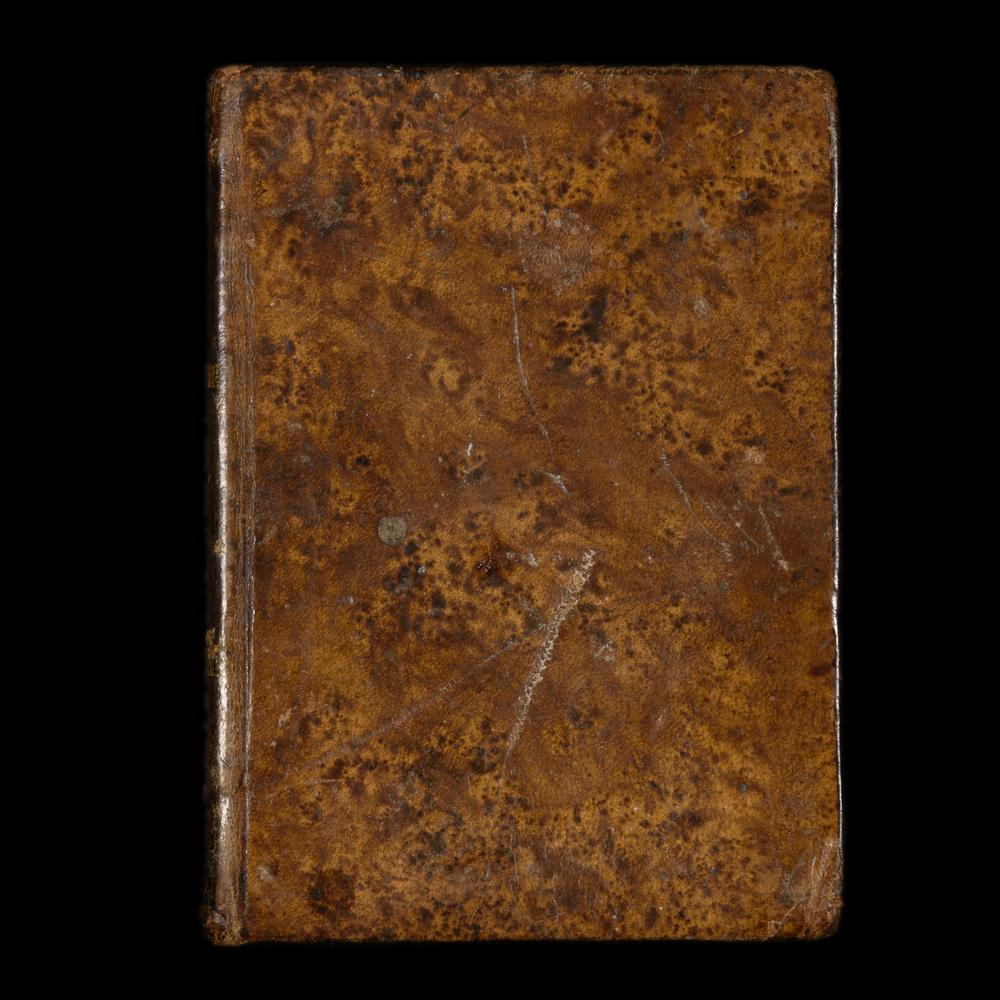
The book is deliberately compact. Its format, its period binding in deeply patinated brown leather, and the noticeable flexibility of the pages indicate a volume intended to be carried, opened quickly, and consulted in action. It accompanied the priest in concrete situations: possessions, infestations of places, persistent disturbances, natural plagues, damage to crops, and disorders attributed to demonic activity. Nothing in this work belongs to speculation or silent contemplation; everything is directed toward ritual effectiveness.
The Fasciculus Exorcismorum gathers a dense corpus of proper exorcisms, conjurations, and blessings. The formulas are intended to compel the demon, to drive it from persons, houses, lands, and animals, but also to repel its action upon the elements: winds, storms, clouds considered malignant, destructive insects, and other plagues. The demon is constantly named, addressed, and commanded. It is never a metaphor, but a personal entity, capable of acting upon both the visible and invisible worlds.
The exorcisms contained in this volume are direct, authoritative, and structured. They take the form of explicit injunctions, commands pronounced in the name of God, and invocations intended to force the demon to withdraw. The text alternates litanies, commands, and concluding prayers according to a rigorous sequence meant to be spoken aloud. The book does not describe the struggle against evil; it is meant to conduct it.
The entire text is written in Latin, the ritual and juridical language of the Catholic Church. This choice confirms the strictly official and liturgical nature of the work: these are the very words that had to be pronounced for the act of exorcism to be considered valid. Nothing is left to personal interpretation or improvisation.
The present copy is particularly distinguished by the presence of old handwritten marginal annotations appearing alongside several passages. These brief notes, limited to indications such as “si” and “no”, are neither commentary nor doctrinal additions. They belong to a strictly functional use. They mark formulas to be employed—or, on the contrary, avoided—depending on the situation encountered. These handwritten signs reveal an active, professional reading in which the priest selects, prioritizes, and applies the rites according to the gravity and nature of the evil being confronted.
These annotations are crucial: they prove that this book was not merely owned, but used in action, handled at the very moment when the exorcisms were being pronounced. The printed text is not static; it is worked through, navigated, and activated. The volume thus becomes a genuine instrument of ritual combat, adapted by its user to concrete circumstances.
The period brown leather binding is authentic and unrestored. It shows rubbing, old traces of handling, and a deep patina consistent with prolonged use. The interior is sound, the printing clear and legible, with a few old marks compatible with the age and function of the volume, without affecting readability. The whole retains remarkable coherence and solidity for a ritual book of this period.
The Fasciculus Exorcismorum today stands as a rare material witness to the effective practice of exorcism in Catholic Europe at the end of the early modern period. It is not a book about the demon, but a book designed to confront it, held in the hands of those convinced that the words written on these pages could compel a hostile presence and restore spiritual order.
Condition and Bibliophilic Description
Octavo volume, 136 pages. Period full brown leather binding, raised bands on the spine, unrestored, showing a deep usage patina with rubbing and old traces of handling. Interior sound, printing clear and regular. Old handwritten marginal annotations, strictly functional in nature. Solid work, well preserved for an operative exorcism manual from the late 17th – early 18th century.
Format : in-12, 136 pages
Dimensions : approx. 15 × 11 cm
Size : approx. 5.9" × 4.3"
Language : Latin
Dating : late 17th – early 18th century
Binding : period full leather, raised bands on spine, unrestored working binding