DIABOLICAL TERRACOTTA HOLY WATER STOUP, 17TH CENTURY
DIABOLICAL TERRACOTTA HOLY WATER STOUP, 17TH CENTURY
Our prices are in euros, the prices converted in dollars or other currencies can vary according to the rate.
Free shipping – fast and secure delivery.
ref: #RK00-879Couldn't load pickup availability
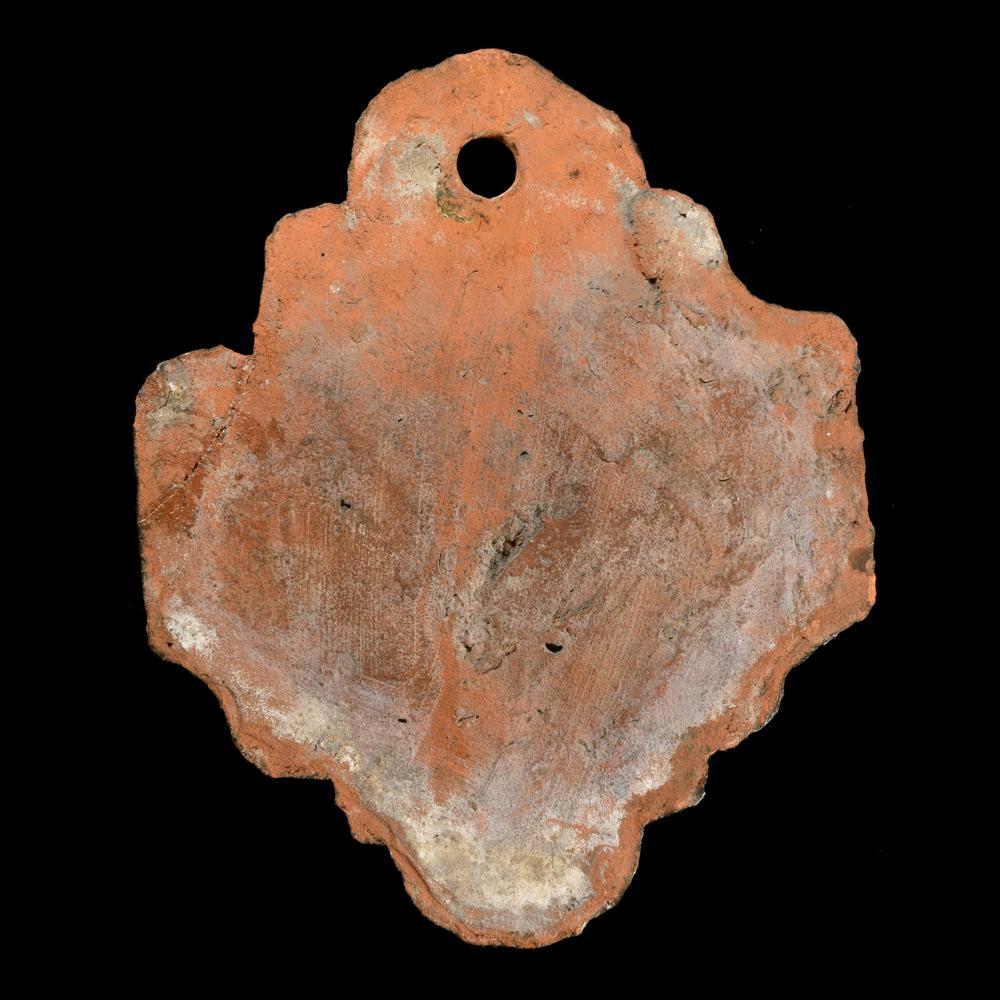
Rare polychrome terracotta wall holy water stoup representing a demonic head sticking out its tongue. The piece, of great expressive force, depicts a grimacing face with exaggerated features, pointed ears, curved horns, furious eyes, and a protruding tongue, following a deliberately terrifying iconography intended to keep Evil at bay.
Beneath the ancient pictorial layer, the red terracotta emerges, bearing witness to an authentic patina formed over several centuries. Despite minor chips and an old stabilized crack, the overall condition is remarkably good for a liturgical object of the 17th century.
The use of a diabolical figure as a holy water stoup may come as a surprise. Yet such objects belong to an almost vanished apotropaic tradition: employing the very image of the demon to subdue it, humiliate it, and keep it away from sacred spaces. In certain rural churches of Alpine and southern regions, grimacing faces—sometimes overtly demonic—were carved beneath holy water basins, their deformity and infernal expression meant to frighten away malevolent influences and to remind the faithful that Evil was literally placed beneath the sacred. The head, cast down below, supported the basin like a defeated servant, condemned to bear the holy water it feared. Thus, the hated creature was forced—almost humiliated—into serving the blessing itself.
Whoever dipped their fingers into the water above this infernal figure performed a protective gesture imbued with an intuitive and ancient piety, in which fear of the demon was not opposed to the power of grace, but rather combined with it to keep the unseen at a distance. Very few examples have survived, most having been destroyed in the 19th century during church “purifications” and renovations, deemed too popular, too disturbing, or too closely tied to older symbolic traditions.
One of the very few demonic holy water stoups still preserved within a religious building is that of the church of Rennes-le-Château, made famous by the mysteries surrounding Abbé Bérenger Saunière. This stoup, depicting a kneeling devil supporting the basin, belongs to the same tradition: diverting the figure of Evil and turning it into an unwilling servant, reminding us that even the devil can be compelled to carry holy water. The parallel between that example and the present piece is striking: the same tension between the sacred and the grotesque, the same paradoxical use of infernal iconography in a Christian context, and the same fascination with spiritual ambiguity.
Demonic holy water stoups are today among the rarest liturgical objects of popular Catholicism. This type of object stands at the crossroads of early popular Catholicism, rural protective magic, and the first forms of Christian esotericism. It bears witness to popular practices often absent from written records yet deeply rooted in the religious culture of the 17th century. Here we encounter a lived, instinctive theology, in which fear of the demon coexists with the certainty that sacramentals—here, holy water—prevail over all infernal powers.
Condition: Old wear, flaking polychromy, stabilized crack — condition consistent with age and use.
PERIOD : 17th century
DIMENSIONS : approx. 24 cm × 20 cm
SIZE : approx. 9.4" × 7.8"
Beyond its historical value, this object possesses a particularly strong, almost theatrical presence. Its symbolic power—half religious, half esoteric—makes it an exceptional piece for collectors of popular sacred art, apotropaic objects, or artifacts connected to the demonic within Christian culture.