Our prices are in euros, the prices converted in dollars or other currencies can vary according to the rate.
Free shipping – fast and secure delivery.
ref: #RK00-745Couldn't load pickup availability
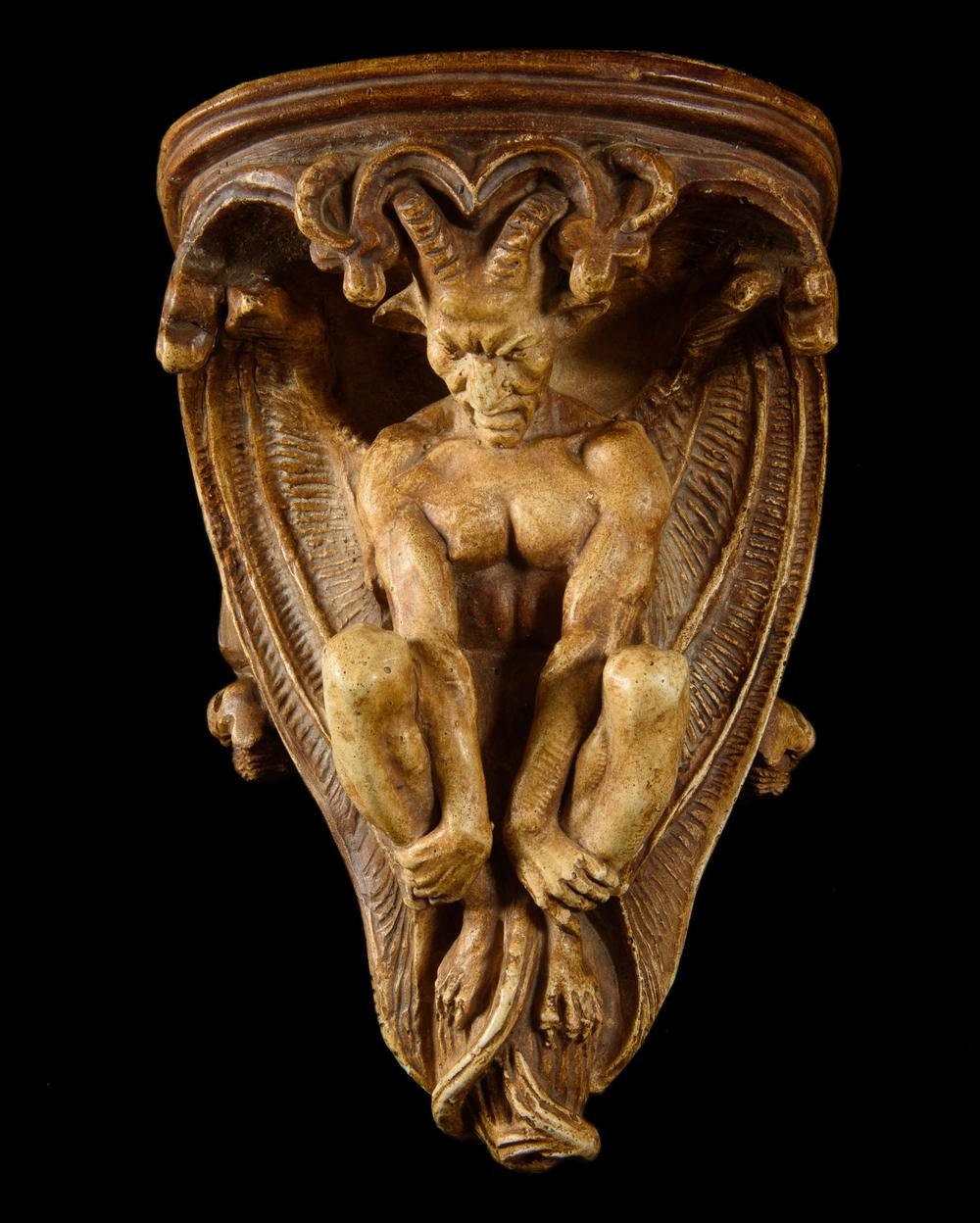
This 19th-century plaster wall console is a remarkable sculptural study, likely created by a sculptor as part of a larger architectural or decorative project. Semi-circular in shape with a flat upper shelf, it is designed to be mounted against a wall. Its appearance and certain technical details suggest that it was not intended for permanent installation, but rather for workshop use.
The central element of this console is a demonic figure, crouched, naked, folded in on itself in an oppressive, restrained posture. Its musculature is tense, its grimacing face expresses rage or inner torment. It features spiral horns with vegetal branches, reminiscent both of traditional devil iconography and the organic forms favored by 19th-century occultist artists. Its membranous wings, folded like dark veils behind it, evoke fallen angels, abyssal powers, and also the gargoyles and infernal creatures of Gothic cathedrals.
The demon, eyes cast downward, assumes an attitude of intense, almost predatory watchfulness. Far from being simply crushed or defeated, it seems rather on the lookout, lurking in the shadows, as if stationed above to observe or scrutinize those who pass below. This stance, combined with visible muscular tension, suggests relentless vigilance and a malevolent presence.
The entire piece is made of patinated plaster, imitating brown stone or aged wood. The surface shows tool marks and an unfinished back—clear signs of a study work, perhaps preparatory to a piece in wood, stone, or bronze. This type of winged demon recalls the Atlantean or grotesque figures of Gothic capitals or the expressive consoles of medieval cathedrals.
This work is typical of the fin-de-siècle taste for diabolical, ambiguous, esoteric themes, in an era fascinated by spiritualism, occult societies, the rediscovery of the Middle Ages, and the symbolism of darkness. It reflects the intrusion of the fantastic into decorative art, where the grotesque becomes an expressive language and vehicle for a deeper imagination—that of shadow, sin, and the invisible.
PERIOD: 19th century
DIMENSIONS: 26 cm × 18 cm
SIZE: 10.2" × 7"