ANTIQUE ENAMELED METAL CONFESSIONAL GRILLE
ANTIQUE ENAMELED METAL CONFESSIONAL GRILLE
Our prices are in euros, the prices converted in dollars or other currencies can vary according to the rate.
Free shipping – fast and secure delivery.
ref: #RK00-371Couldn't load pickup availability
Northern Italy, 19th century
This authentic confessional grille, made of white enameled metal, comes from a Catholic confessional from northern Italy and dates from the 19th century.
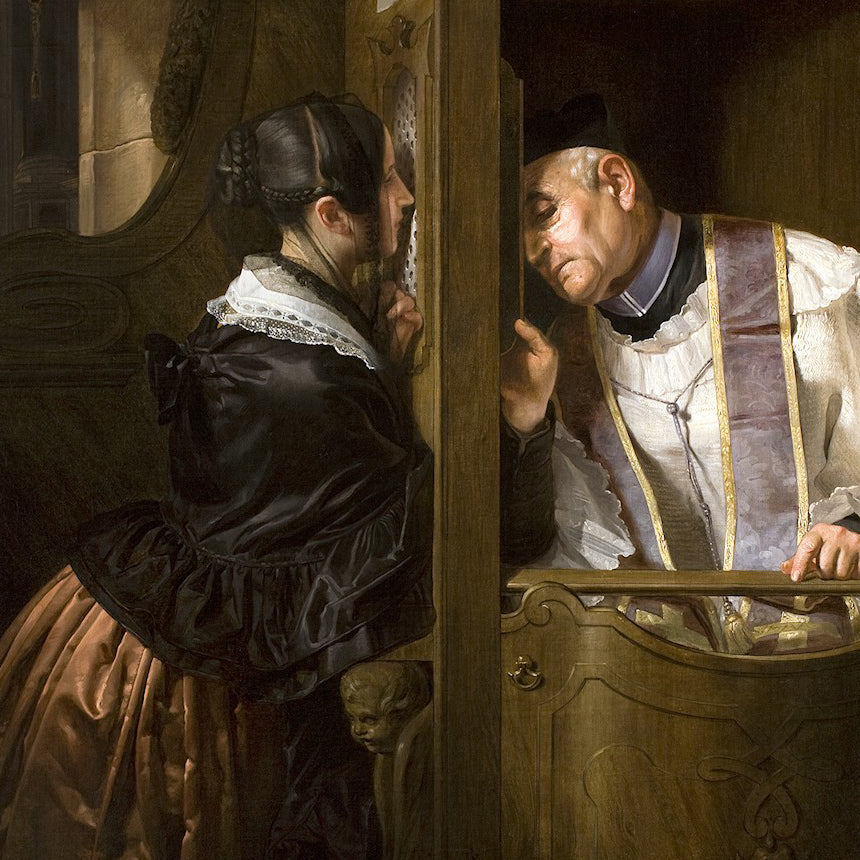
Used as a separating element between priest and penitent, this perforated grille allowed both the circulation of the voice and the preservation of anonymity, in accordance with the liturgical practices of the sacrament of penance as established from the early modern period onward.
The regular pattern of perforations, sober and functional, responds to a precise requirement: to maintain physical distance while encouraging discreet exchange within an enclosed and silent space. This type of enameled metal grille appears mainly in the 19th century, a period marked by the rationalization of forms and materials in ecclesiastical furnishings.
The surface retains an aged patina, with chips to the enamel and traces of oxidation consistent with its age and use. These marks testify to an object long integrated into the daily life of a place of worship, without structural alteration.
PERIOD : 19th century
DIMENSIONS : 33cm X 25cm
SIZE : 13" X 9.9"
Confessionals trace their origins to the early centuries of Christianity, when confession was public and collective. During the Middle Ages, with the rise of individual confession, churches began to create spaces reserved for confidentiality. The use of separate confessionals for priest and penitent became widespread from the Renaissance onward, providing an intimate setting conducive to sincerity. This practice then spread throughout the Catholic world, becoming an essential component of the sacrament of reconciliation. Thus, confessionals became emblematic elements of spiritual life within churches.
Confessionals, emblems of spirituality, are intimate alcoves where the faithful confide in God through the mediation of their priests. Adorned with finely carved wood or worked metal, these sanctuaries offer refuge for the troubled soul. In their subdued darkness, sins are revealed and secrets shared, in an act of contrition and redemption. Confessionals transcend time, linking the present to the confessions of generations past. Each confessional tells a silent story, a testimony of faith and repentance. These sanctuaries of confession embody the promise of absolution and the quest for inner peace.