COFFIN PALL – 19TH CENTURY
SOLD — This object is now part of a private collection
COFFIN PALL – 19TH CENTURY
Our prices are in euros, the prices converted in dollars or other currencies can vary according to the rate.
Free shipping – fast and secure delivery.
ref: #RK00-980Couldn't load pickup availability
Black Velvet Coffin Pall with Silver Thread Embroidery – 19th Century
France, circa 1835–1865
Rare and elegant 19th-century ceremonial funeral pall, also known as a coffin pall, intended to cover the coffin during religious services and funeral ceremonies.
Made of fine-quality black velvet, it is entirely decorated with hand-executed embroidery in silver metallic threads, using several techniques including couching and filling stitches. The composition is arranged around a large Latin cross formed by delicate scrolling foliage, harmoniously structuring the entire surface of the textile.
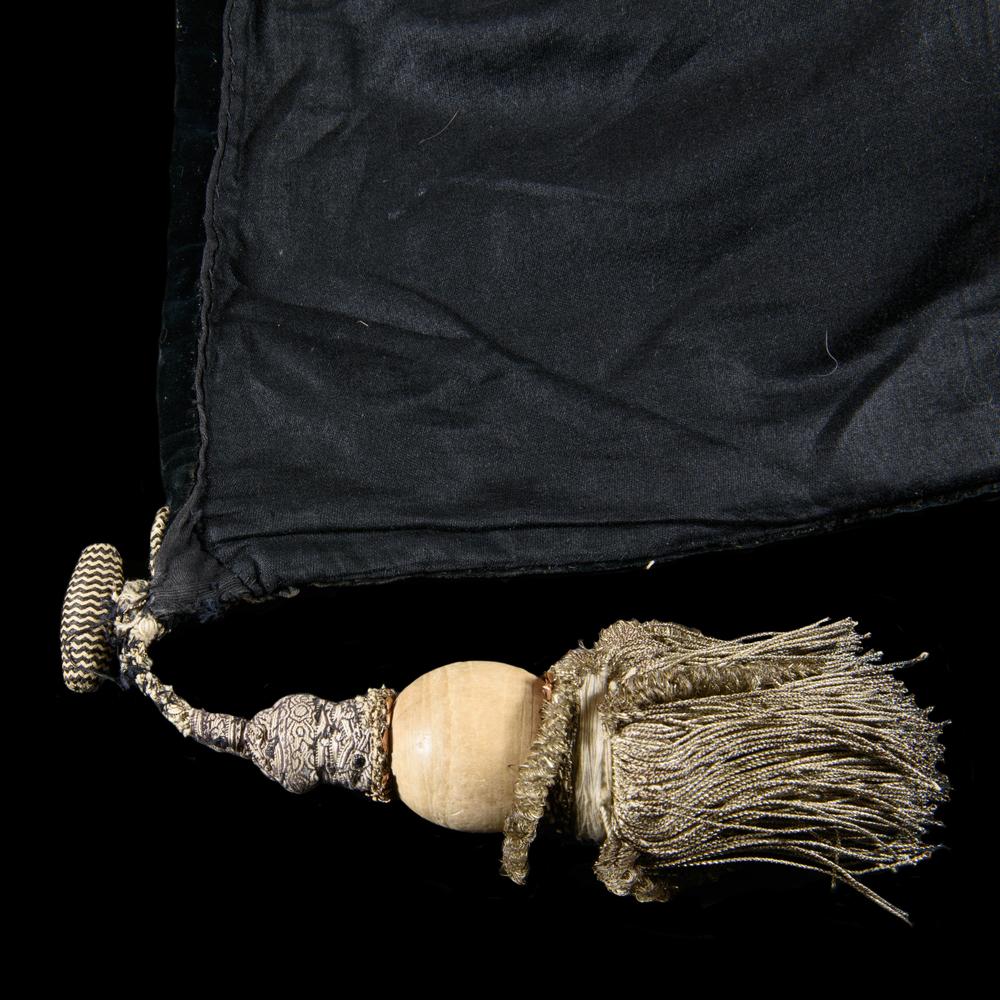
The borders are richly embroidered with scrolling ivy, flowers and stylised foliage. The four corners are occupied by large funerary emblems framed by elegant floral compositions, while all four corners retain their original passementerie tassels, composed of metallic fringes, turned wooden beads and woven cords – elements rarely preserved on textiles of this type.
An old black linen backing, hand-sewn in place, completes the ensemble.
A Refined Memento Mori Iconography
The decoration presents an iconographic programme devoted to the Memento Mori, inviting the faithful to contemplate the brevity of earthly life and the Christian hope of Resurrection.
Among the motifs are:
- a crown of thorns enclosing the three nails of the Passion, symbolising Christ’s redemptive sacrifice and victory over death;
- two winged hourglasses, recalling the irreversible passage of time and the fragility of human existence;
- two veiled cinerary urns, symbols of mourning, remembrance of the deceased and the hope of eternal life;
- numerous stylised tears or flames, evoking the tears of mourning and prayers offered for the souls of the departed;
- scrolling ivy, flowers and foliage, associated with fidelity, enduring remembrance and the hope of immortality.
The overall composition is one of great elegance, with the vegetal ornamentation softening the funerary symbolism without diminishing its spiritual power.
Embroidery of Remarkable Fineness
The detailed photographs reveal a particularly high quality of workmanship.
Unlike many funeral palls decorated with applied metallic ornaments, this example features genuine embroidery worked directly onto the velvet, using different types of metallic thread and filling stitches.
The flowers, foliage, scrolls and emblems display exceptionally delicate draughtsmanship, revealing the skill of a workshop specialising in liturgical embroidery.
The original tassels, still present at all four corners, are a remarkable feature of its preservation and further enhance the ceremonial character of the piece.
The ensemble reflects a prestigious liturgical commission, probably intended for an important parish, religious confraternity or ecclesiastical institution.
Condition
Very fine overall state of preservation.
The velvet retains a beautiful depth of colour.
The metallic embroidery remains particularly fresh and clearly defined, with an attractive antique patina.
All four original tassels are preserved.
Only a few discreet signs of use and very minor areas of wear should be noted, entirely consistent with the age and original function of the piece.
The original old backing is also preserved.
Overall, the piece is in a remarkable state of preservation for a liturgical textile of this period.
Significance
Large, richly embroidered 19th-century funeral palls are now among the most difficult liturgical textiles to find complete, and examples retaining their original tassels are particularly rare.
With the exceptional refinement of its embroidery, the elegance of its vegetal composition, the richness of its funerary iconography and its remarkable state of preservation, this example represents an outstanding piece for a collection devoted to antique textiles, Memento Mori, religious art or historical funerary rites.
It also possesses considerable decorative appeal and would naturally find its place in a museum collection, a cabinet of curiosities or a historic interior.
Date: circa 1835–1865
Dimensions: 220 × 150 cm
Size: 86.6" × 59.1"
The Memento Mori
The iconography of this funeral pall belongs fully to the Christian tradition of the Memento Mori – “remember that you will die”. This meditation on the fragility of earthly life encouraged the faithful to prepare themselves spiritually for death and eternal life.
The winged hourglasses recall the inexorable passage of time, while the funerary urns evoke the common destiny of humankind and the remembrance of the dead. The tears express the sorrow of mourning and the prayers of the living.
At the centre, the three nails enclosed within the crown of thorns refer directly to the Passion of Christ. Placed at the heart of the composition, this emblem gives the entire work its profound meaning: death is presented not as a definitive end, but as a passage under the sign of sacrifice, redemption and the hope of Resurrection.