17TH-CENTURY CARVED WOOD CRUCIFIX CHRIST
17TH-CENTURY CARVED WOOD CRUCIFIX CHRIST
Our prices are in euros, the prices converted in dollars or other currencies can vary according to the rate.
Free shipping – fast and secure delivery.
ref: #RK00-965Couldn't load pickup availability
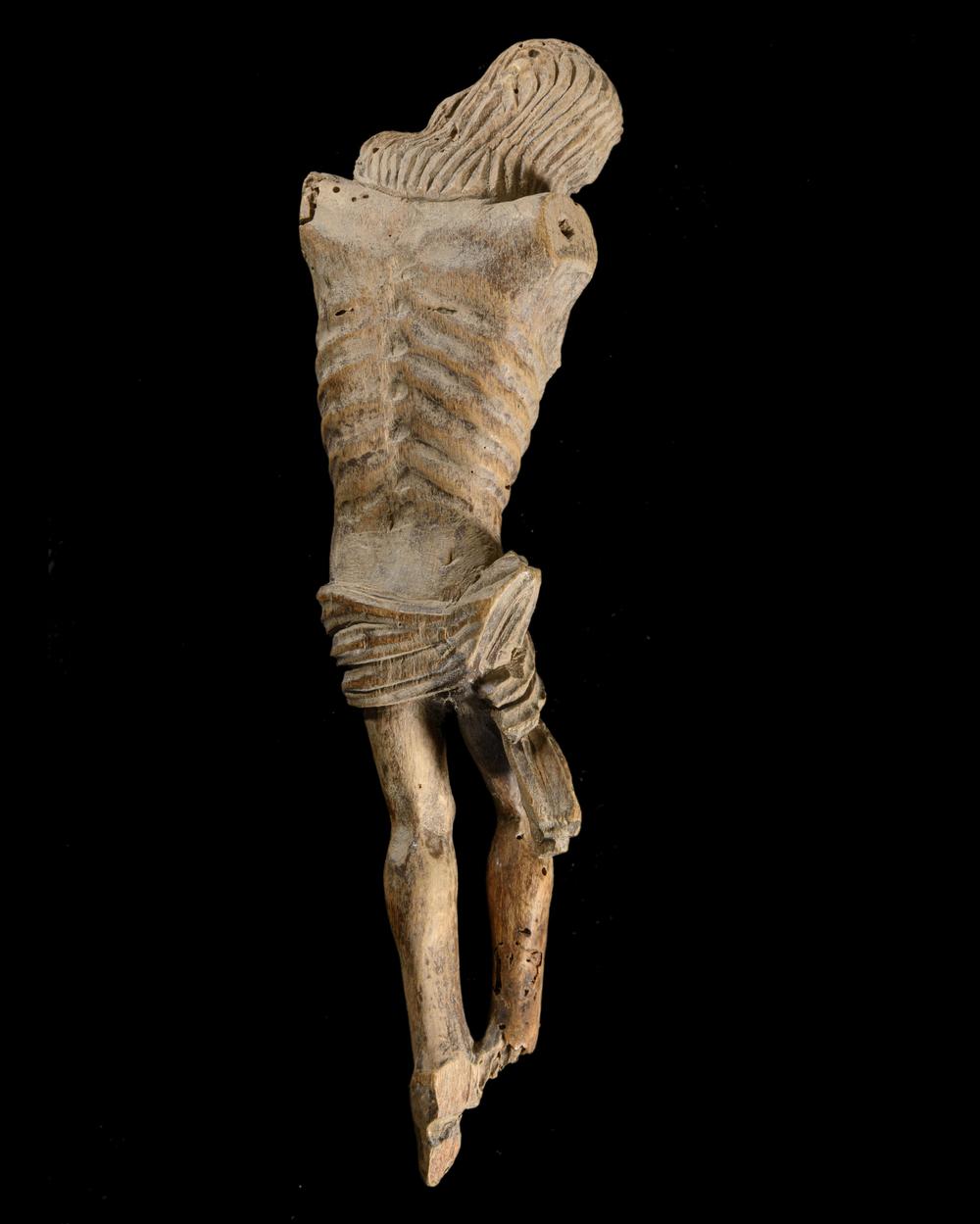
Rare carved wooden sculpture of Christ on the Cross, dating from the late 17th or early 18th century.
This moving representation of the Crucified Christ is distinguished by its striking expressiveness and deeply popular character. Carved from a single block of wood, it depicts Christ with an exceptionally emaciated body. The deliberately emphasized anatomy highlights the sufferings of the Passion.
The head, strongly inclined toward the right shoulder, conveys the Savior’s final moments. The face is characterized by a full beard, long hair falling onto the shoulders, and features marked by pain and resignation. The prominent ribs, hollow chest, and narrow waist reinforce the dramatic intensity of the composition.
The perizoma, simply rendered, is tied at the hip and retains fine carved details. The arms, now missing, were originally attached separately, a technique frequently employed in religious sculpture during the 17th and 18th centuries.
The sculpture displays a beautiful aged patina acquired over centuries. Numerous traces of woodworm activity, surface wear, shrinkage cracks, and old alterations testify to its great age and authentic devotional use. These marks of time give the work a particularly moving presence.
With its rustic and sincere style, this piece belongs to the tradition of crucifixes made for rural chapels, domestic oratories, and popular missions, intended to encourage meditation on the Passion of Christ.
A fine antique devotional object with a strong aesthetic presence despite its losses.
PERIOD: Late 17th – Early 18th Century
MATERIAL: Carved Wood
DIMENSIONS: 29 cm
SIZE: 11.4"
CONDITION:
Arms missing.
Significant old woodworm traces.
Wear and losses consistent with age.
Original polychromy largely faded.
Christ of the Passion
Since the Middle Ages, representations of the Crucified Christ have occupied a central place in Christian art. Their purpose was to remind the faithful of Christ’s redemptive sacrifice and to encourage meditation on the sufferings endured during the Passion. From the 17th century onward, under the influence of the Catholic Counter-Reformation, artists often emphasized realism and the expression of pain in order to inspire deeper devotion. Crucifixes intended for rural chapels and private oratories frequently favored a simple yet expressive depiction, where emotional impact took precedence over academic refinement. This sculpture perfectly illustrates that popular tradition, in which faith and religious sensitivity are expressed through a deeply human and moving work.